If you are wondering whether your baby or child might have a tongue-tie, you are not alone. Many parents first notice subtle feeding or speech concerns before learning about this condition.
Tongue-tie, also known as ankyloglossia, can affect infants, toddlers, and even older children. Recognising the symptoms early allows for proper evaluation and guidance.
Is My Baby Tongue-Tied?
In babies, tongue-tie often becomes noticeable during feeding. Because the tongue plays an essential role in latching and milk transfer, restricted movement can lead to challenges.
Signs in infants may include:
- Difficulty latching
- Clicking sounds during feeding
- Frequent breaks while feeding
- Prolonged feeding sessions
- Poor weight gain
- Maternal nipple pain during breastfeeding
Not every feeding issue is caused by tongue-tie, but persistent problems should be assessed.
What Is Tongue-Tie?
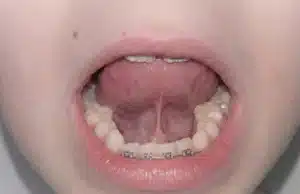
Tongue-tie occurs when the band of tissue under the tongue (lingual frenulum) is tight, thick, or positioned in a way that restricts movement.
The severity can vary. Some children have mild restriction without symptoms, while others experience noticeable functional difficulties.
Why Does Tongue-Tie Occur?
Tongue-tie is present at birth. The exact cause is not fully understood, though there may be a genetic component in some families.
It is a structural variation, not something that develops over time.
How Common Is Tongue-Tie?
Tongue-tie is relatively common in newborns. However, not all cases require treatment. The decision to intervene depends on how much it affects function.
Symptoms of Tongue-Tie
Symptoms can vary by age and severity.
A. Feeding Difficulties in Babies
Restricted tongue movement may lead to:
- Shallow latch
- Incomplete milk transfer
- Gassy or unsettled behaviour after feeds
- Falling asleep during feeds
- Slow weight gain
Feeding challenges are often the earliest sign.
B. Speech Challenges in Older Children
In some cases, tongue-tie may affect speech clarity.
Children may struggle with sounds that require tongue elevation or forward movement, such as:
- L
- R
- T
- D
- Th
Not all speech delays are caused by tongue-tie, but evaluation may be recommended if articulation remains unclear.
C. Limited Tongue Mobility
You may notice that your child:
- Cannot stick their tongue out far
- Has difficulty lifting the tongue toward the roof of the mouth
- Shows a heart-shaped tongue tip when extended
- Struggles to lick lips or ice cream
Limited movement can affect oral development over time.
D. Dental and Oral Hygiene Concerns
Restricted tongue movement may contribute to:
- Difficulty clearing food debris
- Increased plaque build-up
- Challenges with brushing certain areas
The tongue plays a natural role in maintaining oral cleanliness.
How Do Dentists Diagnose Tongue-Tie?
Diagnosis involves more than simply observing the frenulum.
A. Visual Examination
We assess the appearance, thickness, and attachment location of the frenulum.
B. Functional Assessment
We evaluate tongue mobility, feeding efficiency, and speech concerns.
C. Feeding or Speech Input
In infants, feeding patterns are reviewed. In older children, speech development may be considered.
Diagnosis focuses on functional impact, not just structure.
Is Tongue-Tie Always Treated the Same Way?
No.
Treatment decisions depend on:
- Age
- Severity
- Functional limitations
- Feeding or speech impact
Some cases require only monitoring. Others may benefit from a release procedure.
When Should I See a Professional?
Seek evaluation if you notice:
- Persistent feeding difficulties
- Ongoing maternal discomfort during breastfeeding
- Speech articulation concerns
- Clear restriction of tongue movement
- Dental hygiene challenges related to tongue mobility
Early assessment provides clarity and reassurance.
What Should I Expect After Treatment?
If a tongue-tie release is recommended:
- The procedure is typically quick
- Healing is usually straightforward
- Feeding or speech improvements may be gradual
Post-procedure exercises or support from lactation consultants or speech therapists may be advised.
Every child responds differently.
Frequently Asked Questions
Can tongue-tie go away on its own?
Mild cases may stretch naturally over time, but significant restriction typically remains.
Can tongue-tie affect sleep?
In some cases, restricted tongue posture may influence breathing patterns.
Does tongue-tie always require surgery?
No. Only functionally limiting cases typically require intervention.
Is tongue-tie hereditary?
There may be a genetic link in some families.
Is treatment safe?
When performed by trained professionals, complications are rare.
Where Can I Get Help in Brisbane?
If you are concerned about feeding challenges, speech clarity, or restricted tongue movement, professional evaluation can provide guidance.
At Dental Nook in Brisbane, we offer:
- Thorough assessment
- Functional evaluation
- Clear explanation of options
- Gentle, child-focused care
Supporting healthy oral development starts with early understanding.
Book a consultation to discuss your child’s symptoms and next steps.