

General anaesthesia is a medically controlled, sleep-like state created with a combination of medicines. These medicines are given just before and during your procedure, usually through a drip and sometimes together with inhaled gases. While the anaesthetic is working, you are fully asleep and unaware of the treatment.
When you are under general anaesthesia, you do not simply feel drowsy – your brain temporarily stops recognising pain signals and reflex responses. This means you will not feel or remember the dental procedure while the anaesthetic is active.
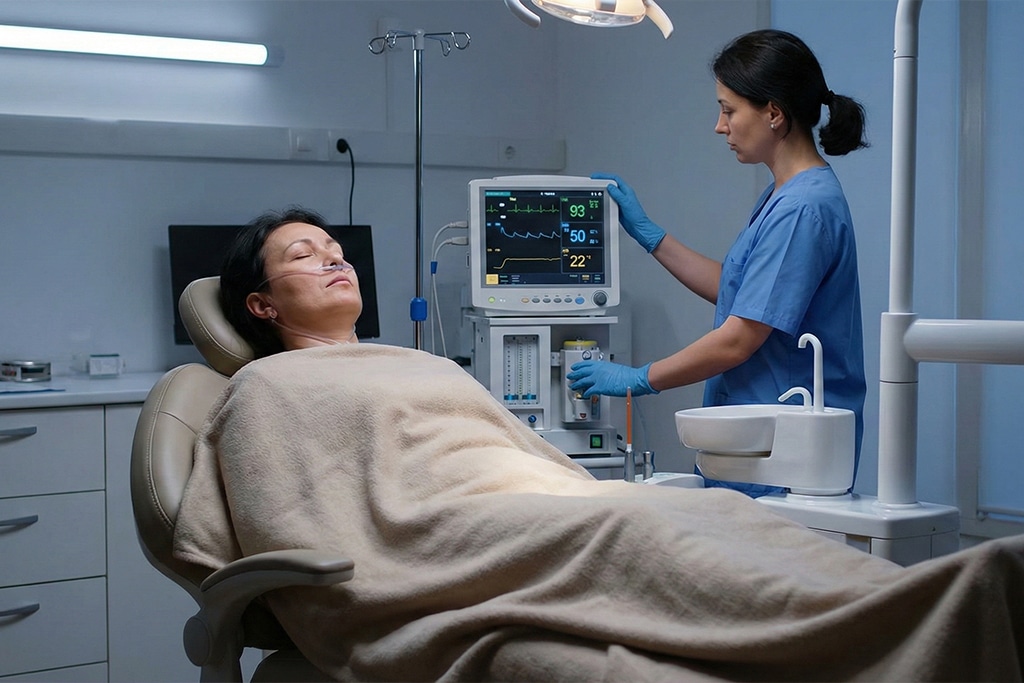

Your anaesthetic is administered by a specialist doctor called an anaesthetist. At Dental Nook’s partner hospital facilities, the anaesthetist works with a trained support team. Their job is to keep you safe, comfortable and stable from the beginning of the anaesthetic through to your recovery.
Throughout your procedure, the anaesthesia team will:
General anaesthesia can make dental treatment possible for adults with special needs, severe anxiety, strong gag reflexes or complex treatment plans that are difficult to complete in the dental chair. Medication is given via injection or a mask, you drift off to sleep within moments, and your dentist completes the planned work while a team of doctors and nurses supervises you closely in theatre and in the recovery area.
It is a precisely controlled, temporary state designed to allow you to receive the dental care you need in the most comfortable and stress-free way possible.
When you have treatment under general anaesthesia, you gently fall asleep and remain fully unaware of what is happening. Your brain does not react to pain signals or reflexes during this time, so you do not feel any pain throughout the procedure
General anaesthesia is a medically controlled state in which you are fully unconscious, have no memory of the procedure, and your reflexes are suppressed, allowing dental treatment to be carried out safely, comfortably and free from pain or distress.
For some patients, even routine dental care feels overwhelming. In these situations, general anaesthesia (GA) can be an appropriate sleep dentistry option. It is often recommended for people who have:
Under GA, you are fully asleep and unaware of the procedure. This deeply unconscious state can continue for several hours after your treatment is finished.
Because you are completely asleep, our dentists can safely complete treatment on several teeth or areas of the mouth in one session, something that is often difficult or impossible with a local anaesthetic alone.
Most patients can return home later the same day, but you must have a responsible adult with you to escort you to and from the hospital and stay with you for at least eight hours after your procedure.
If you have any questions about your recovery, follow-up care, or sleep dentistry for children, please speak directly with your treating dentist or anaesthetist at Dental Nook.
General anaesthesia may be recommended for patients with severe dental anxiety, strong gag reflex, traumatic dental history, extensive treatment needs, special needs, or medical and behavioural conditions that make conventional treatment difficult or unsafe.
Yes. Under general anaesthesia, you are fully asleep and completely unaware of the procedure until you wake up in recovery.
General anaesthesia is generally safe when carefully planned and provided by trained professionals in the appropriate setting. Your medical history, medications, and treatment needs are reviewed beforehand.
Your care is managed by both the dental team and an anaesthetist. The anaesthetist monitors you throughout the procedure and recovery to help keep you safe and comfortable.
During general anaesthesia, your vital signs such as heart rate, blood pressure, breathing, and oxygen levels are continuously monitored throughout the procedure.
General anaesthesia can be used for a wide range of procedures including wisdom teeth removal, multiple extractions, dental implants, restorative treatment, treatment for special needs patients, and other complex dental procedures.
Your dentist will give you specific instructions before treatment. These may include fasting beforehand, arranging for an adult to accompany you, reviewing medications, and following hospital or clinic preparation instructions carefully.
Yes. You will usually need a responsible adult to take you home and stay with you for the time advised by your dental team after the procedure.
Yes, in some cases. For patients with severe dental phobia or intense fear, general anaesthesia can make necessary treatment possible by allowing the procedure to be completed while the patient is fully asleep.
Please note that this is not an actual appointment, but only a request for one. We Will Contact you for a confirmation shortly after. Thank you!
general anesthesia dentist, general anaesthesia dentist, general anaesthetic dentist, general anesthetic dentist
General anaesthesia offers numerous advantages for patients undergoing dental procedures, particularly those with anxiety or special needs. One of the primary benefits is the complete elimination of pain and discomfort, allowing patients to undergo extensive treatments without the stress of local anaesthesia. This state of unconsciousness ensures that patients remain calm and relaxed throughout the procedure, which can lead to a more successful outcome.
Moreover, general anaesthesia enables dentists to perform multiple procedures in one session, which is especially beneficial for patients with complex dental issues. By minimizing the number of visits required, patients can save time and reduce the overall stress associated with dental care. Additionally, the controlled environment under general anaesthesia allows for a more comprehensive approach to treatment, as the dental team can focus entirely on the procedure without interruptions caused by patient discomfort.
While general anaesthesia is generally safe, it is essential for patients to be aware of potential risks and considerations. Common side effects may include nausea, grogginess, and confusion upon waking. In rare cases, more severe complications can arise, such as allergic reactions or respiratory issues. Therefore, a thorough pre-operative assessment is crucial to identify any underlying health conditions that may increase risk.
Patients should also discuss their medical history with their dentist and anaesthetist to ensure a tailored approach to their care. Understanding these risks empowers patients to make informed decisions regarding their dental treatment options and prepares them for a smoother recovery process. It's vital to follow all pre-operative instructions to minimize these risks and enhance the overall safety of the procedure.
After undergoing dental treatment with general anaesthesia, proper post-procedure care is essential for a smooth recovery. Patients are typically monitored for a period to ensure that vital signs are stable and that they are waking up comfortably from the anaesthetic. It is important to have a responsible adult accompany the patient home, as they may still feel groggy or disoriented after the procedure.
In the days following the treatment, patients should adhere to any specific aftercare instructions provided by their dentist. This may include dietary restrictions, pain management protocols, and guidelines on activity levels. Staying hydrated and resting adequately can significantly aid recovery, while attending follow-up appointments ensures that the healing process is on track and any concerns are promptly addressed.
For patients who may not be suitable candidates for general anaesthesia, alternative sedation options are available to help manage dental anxiety. These options include nitrous oxide (laughing gas), oral sedatives, and IV sedation, each providing varying levels of relaxation and comfort during dental procedures. Nitrous oxide is particularly popular due to its quick onset and recovery time, allowing patients to feel calm without the lingering effects of general anaesthesia.
Oral sedatives can be prescribed prior to the appointment, helping to alleviate anxiety before arriving at the clinic. IV sedation allows for deeper relaxation and is closely monitored by the dental team throughout the procedure. Discussing these alternatives with the dental team can help patients choose the best option for their needs, ensuring that they receive the necessary care while feeling safe and comfortable.