What Is Odontodysplasia?
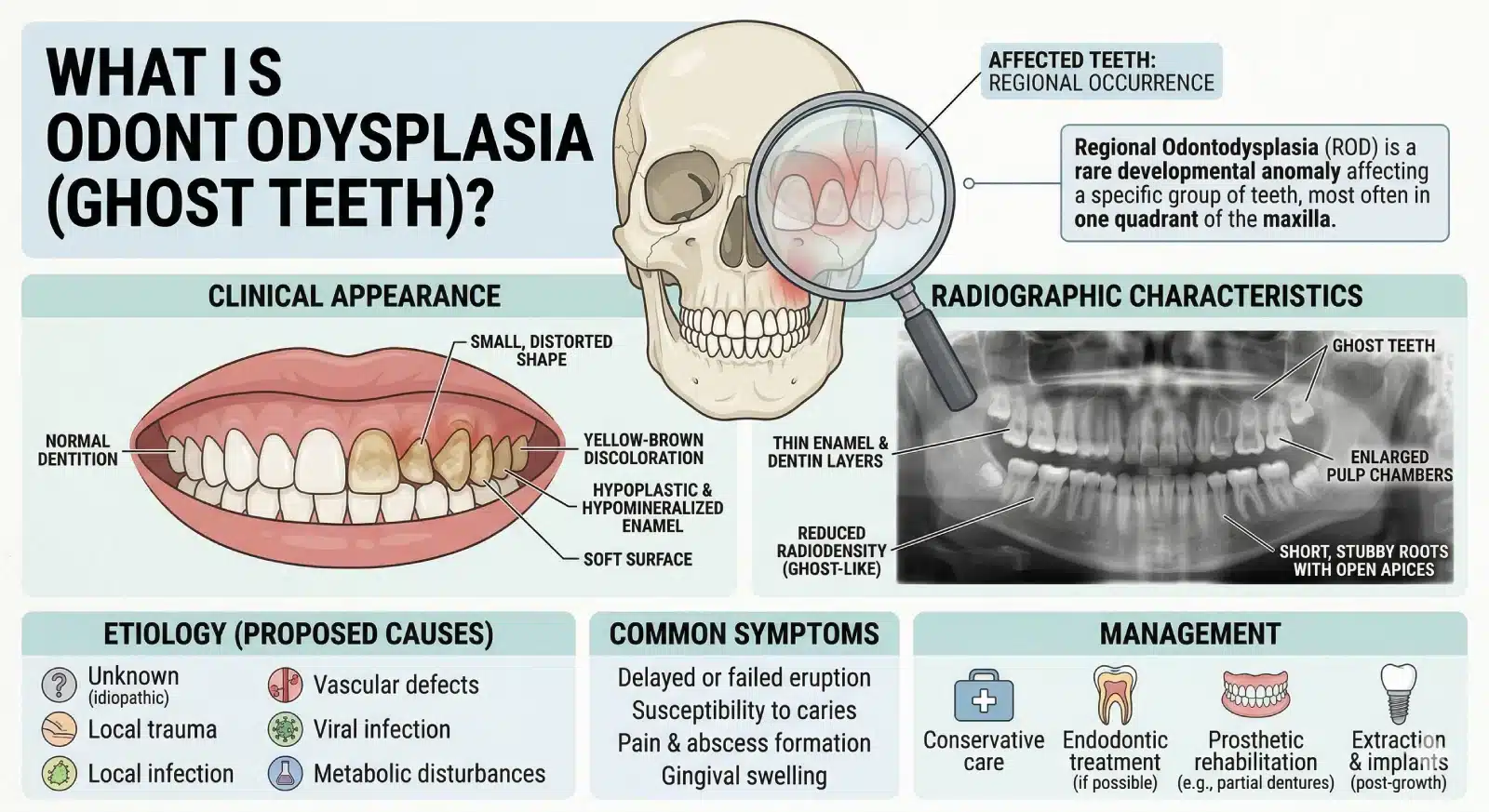
Odontodysplasia is a rare dental condition that affects the development of teeth. It can impact both baby teeth and adult teeth, causing them to form incorrectly. Teeth affected by this condition may appear small, weak, discoloured, or may not fully develop.
In many cases, odontodysplasia affects only a specific area of the mouth rather than all teeth. Because the teeth do not develop normally, they can be more likely to break, become infected, or fail to erupt properly. Early diagnosis and regular dental care are important to manage this condition and protect oral health.
Signs and Effects of Odontodysplasia
Odontodysplasia can present differently in each child, but there are several common signs that dentists look for when diagnosing this condition.
Some of the common signs and effects include:
- Delayed tooth eruption where teeth take longer than expected to appear
- Soft or fragile teeth that may chip or wear easily
- Discoloured teeth that may appear yellow, brown, or grey
- Teeth that appear smaller or oddly shaped
- Increased risk of tooth decay and infections
- Swelling or discomfort around affected teeth in some cases
Because the teeth are weaker than normal, they may require special dental care and monitoring as the child grows.
[Video placeholder]
What Causes Odontodysplasia?
The exact cause of odontodysplasia is not always clear, but researchers believe it may be linked to several different factors that affect tooth development.
Viral Infections During Pregnancy
Some research suggests that infections during pregnancy may affect the development of a child’s teeth. If tooth development is disrupted during early stages, it may lead to abnormal tooth formation.
Injuries
Physical injuries to the jaw or developing teeth at a young age may affect how teeth form. Trauma to the area can interfere with normal tooth development.
Radiation Exposure
Exposure to radiation during pregnancy or early childhood may also affect tooth development and may contribute to conditions such as odontodysplasia.
Certain Medications During Pregnancy
Some medications taken during pregnancy may interfere with tooth development. It is important for expecting mothers to discuss medications with their healthcare provider.
Circulatory Issues
Poor blood supply to certain areas of the jaw during tooth development may also contribute to odontodysplasia. Teeth need proper blood supply and nutrients to develop normally.
[Image placeholder]
Why Early Detection Matters
Early detection of odontodysplasia is very important because it helps dentists plan the right treatment and prevent complications. When the condition is identified early, dentists can monitor tooth development and take steps to protect affected teeth.
Regular dental visits allow the dentist to monitor changes, manage infections, and ensure the child remains comfortable while their teeth develop. Early care can also help prevent pain, swelling, and more complex dental problems later.
How Is Odontodysplasia Treated?
Treatment for odontodysplasia depends on the severity of the condition and the overall health of the teeth. Every case is different, so treatment is planned individually.
Common treatment options may include:
- Regular Monitoring: Dentists may monitor the teeth with regular check ups and X rays to track development
- Dental Crowns: Crowns may be used to protect weak teeth and improve function
- Restorative Treatment: Fillings or other treatments may be used to repair damaged teeth
- Tooth Removal: In some cases, severely affected teeth may need to be removed to prevent infection or pain
The goal of treatment is to maintain comfort, function, and appearance while supporting healthy dental development.
How Can Regular Dental Check Ups Help?
Regular dental check ups are very important for children with odontodysplasia. These visits allow the dentist to monitor tooth development, detect any problems early, and provide treatment when necessary.
During check ups, the dentist may take X rays, examine the teeth and gums, and ensure there are no signs of infection or damage. Preventive care and early treatment can help avoid more serious dental problems in the future.
Routine visits also help children become comfortable with dental care and build good oral health habits from a young age.
Frequently Asked Questions
Can Odontodysplasia Spread to Other Teeth?
Odontodysplasia usually affects specific teeth or areas and does not spread like an infection. However, affected teeth need monitoring and care.
Will My Child Need Surgery?
Not all cases require surgery. Treatment depends on the condition of the teeth and may involve monitoring, restorations, or other dental treatments.
How Long Will My Child Need Dental Treatment?
Treatment and monitoring may continue as your child grows, especially while adult teeth are developing.
What Is the Outlook for Children With Odontodysplasia?
With proper dental care and regular check ups, many children can maintain healthy smiles and manage the condition successfully.
My Child Has Dental Anxiety – What Can I Do?
Dentists can provide gentle care and discuss comfort options to help children feel relaxed and comfortable during treatment.
Final Thoughts
Odontodysplasia is a rare dental condition, but with early diagnosis and proper dental care, children can still maintain healthy smiles. Regular dental visits, monitoring, and appropriate treatment help manage the condition and prevent complications.
If you are concerned about your child’s tooth development, a dental check up can help identify any issues early and ensure the best possible care.
[Book Online button placeholder]
Let’s Make Sure Your Child’s Smile Stays Strong – We’re Ready to Help
If you are concerned about your child’s dental development or have noticed unusual tooth growth, our team is here to help. We focus on gentle, supportive dental care for children and aim to make every visit comfortable and positive.
Contact our team to book an appointment and we will help guide you through the next steps for your child’s dental health.