A healthy, well-aligned smile plays an important role in your child’s confidence and overall oral health. Orthodontic treatment is not only about appearance — it also supports proper bite function, jaw development, and long-term dental wellbeing.
If you are wondering whether your child may need braces or early orthodontic care, understanding the signs and benefits can help you make informed decisions.
Why Consider Orthodontic Treatment for Your Child?
Orthodontic care can address a variety of dental concerns that develop as children grow. Early evaluation allows dentists to identify potential alignment or bite issues before they become more complex.
Treatment may help with:
- Correcting crooked or crowded teeth
- Improving bite alignment
- Reducing the risk of future dental complications
- Supporting clearer speech
- Making oral hygiene easier
When teeth are properly aligned, brushing and flossing become more effective, lowering the risk of cavities and gum problems.
Early Orthodontic Treatment: What Parents Should Know
In some cases, orthodontic assessment is recommended during early childhood, even before all permanent teeth have erupted.
Early intervention can:
- Guide jaw growth
- Create space for incoming permanent teeth
- Reduce the need for more extensive treatment later
- Improve overall facial balance
By addressing concerns at the right time, treatment can often be simpler and more effective.
What to Expect During an Orthodontic Consultation
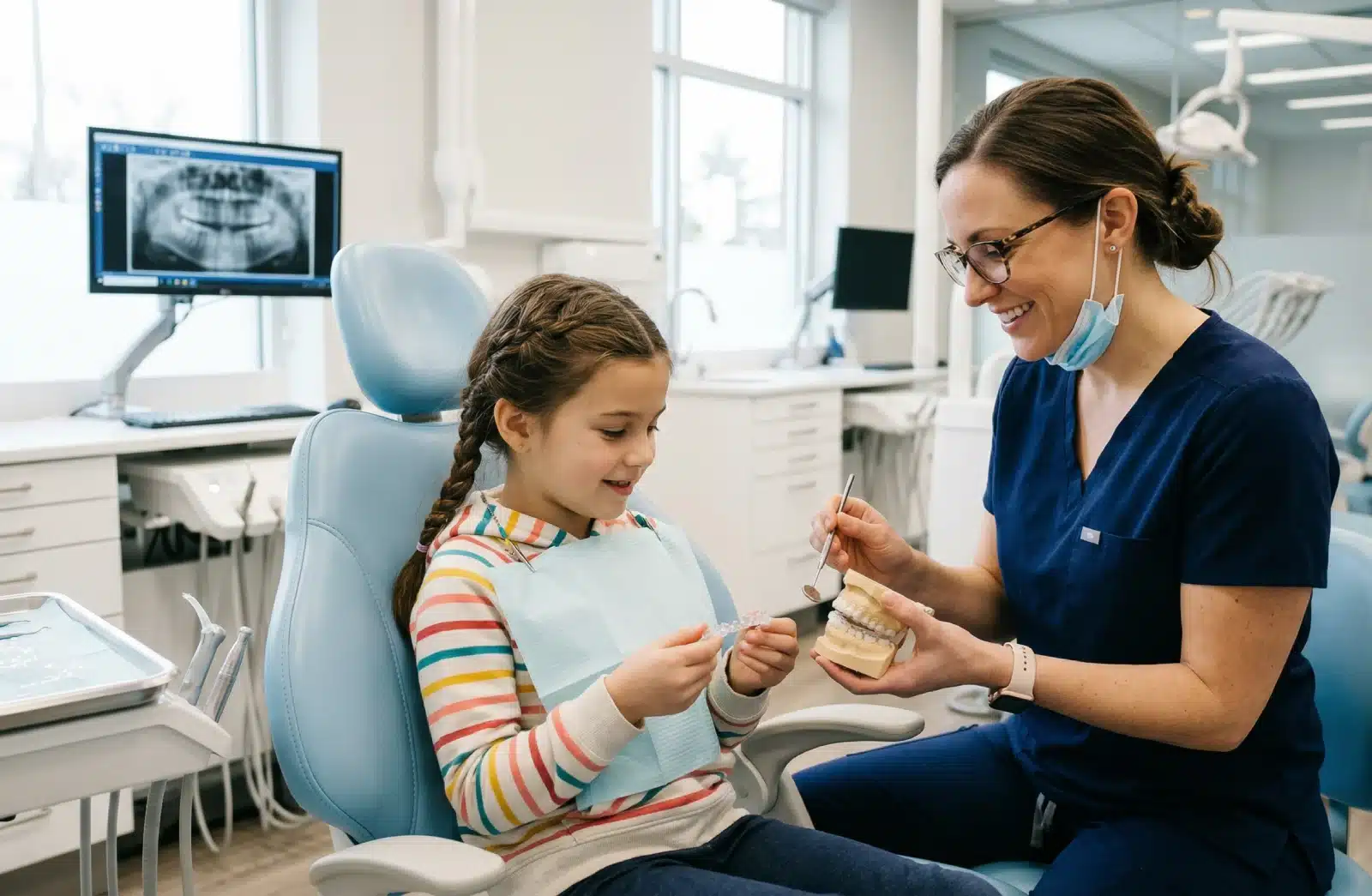
An orthodontic consultation typically includes a thorough examination of your child’s teeth and jaw development. The dentist may use imaging to evaluate alignment and bite position.
Following assessment, you will receive personalised recommendations outlining whether treatment is needed immediately or can be monitored over time.
Not all children require early intervention. In some cases, observation is the best approach until further development occurs.
Signs Your Child May Need Orthodontic Treatment
While only a professional evaluation can confirm the need for orthodontics, certain signs may indicate alignment concerns:
- Crooked or overlapping teeth
- Early or delayed loss of baby teeth
- Difficulty chewing or biting
- Mouth breathing
- Thumb sucking beyond early childhood
- Jaw clicking or shifting
- Crowded teeth
If you notice any of these signs, scheduling an evaluation can provide clarity and peace of mind.
Common Orthodontic Problems in Children
Several dental alignment issues commonly affect growing children.
Misaligned Teeth
Teeth that are not positioned correctly may impact both appearance and function.
Overbite
The upper front teeth significantly overlap the lower teeth.
Underbite
The lower teeth extend beyond the upper teeth.
Crossbite
Some upper teeth sit inside the lower teeth when biting down.
Open Bite
The front teeth do not meet when the mouth is closed.
Spacing Concerns
Gaps between teeth can occur due to missing teeth or jaw development.
Crowding
Insufficient space in the jaw may cause teeth to overlap or rotate.
Early identification of these conditions allows for appropriate management.
The Benefits of Straightening Teeth Early
Addressing orthodontic issues during childhood can lead to:
- Improved oral hygiene
- Better chewing and speech function
- Reduced risk of injury to protruding teeth
- Enhanced confidence
- A more balanced smile
Early treatment can also simplify future orthodontic care.
Creating a Positive Orthodontic Experience
For many children, orthodontic care is a new experience. A supportive and child-friendly approach helps ensure comfort throughout treatment.
Clear communication, gentle care, and regular follow-ups make the process smooth and reassuring for both parents and children.
Comprehensive Orthodontic Care
At Dental Nook, we offer early orthodontic assessments and personalised treatment plans tailored to your child’s needs.
📞 Call us today: 1800 930 336
📅 Book online: Schedule your child’s orthodontic consultation.