
Gold Dental Crowns: A Patient’s Guide from Dental Nook
Gold Dental Crowns: Your Complete Guide
Dental crowns are an important part of restorative and cosmetic dentistry, providing a solution for teeth that require more than a standard filling. Think of a tooth crown as a fitted cap that sits over an existing tooth or a dental implant. They are particularly useful following tooth decay or root canal therapy. By completely encasing the affected tooth, crowns restore its function, shape, and size while also improving its overall appearance. They also shield the remaining tooth structure from further deterioration. A dental crown is bonded firmly into position, covering the full visible portion of the tooth above the gumline.
Do dentists still commonly place gold dental crowns today?
Yes, gold dental crowns remain a widely used option in modern dentistry, though their frequency varies depending on a patient’s location and personal preferences. Gold crowns are valued for their toughness, compatibility with the body, and their gentle effect on neighbouring teeth. They are particularly well-suited for rear teeth, where their strength helps withstand the forces of chewing. Contemporary dental practice continues to recommend gold crowns in specific clinical scenarios, such as for patients with a heavy bite or those who clench and grind their teeth. Although the demand for tooth-coloured restorations has grown in recent years, gold continues to be a practical and frequently preferred material for many dental restorations thanks to its lasting nature and body-friendly characteristics.
Are gold dental crowns a dependable, long-term solution for tooth restoration?
Gold dental crowns are indeed a dependable and effective long-term solution for restoring damaged teeth. Their reliability comes from gold’s outstanding strength and resilience, which makes these crowns highly resistant to fractures and chips. Gold’s natural flexibility allows for an accurate and snug fit, lowering the chance of a crown shifting or loosening with time. This same quality also means less of the natural tooth needs to be trimmed away during the preparation stage.
Additionally, gold crowns are well tolerated by the body, reducing the likelihood of allergic reactions or gum sensitivity. They are an especially practical choice for patients with a strong bite or a history of grinding, as gold wears at a slower rate than alternative materials.
In terms of lifespan, gold crowns frequently outlast porcelain and other crown types, often remaining functional for several decades with consistent oral hygiene and routine dental visits. Although they are more visible than tooth-coloured crowns, this visual drawback is generally outweighed by their strength and protective qualities, particularly for back teeth and molars.
Gold crowns therefore represent a highly effective, lasting solution for tooth restoration, combining resilience, bodily compatibility, and minimal tooth reduction.
Why might a dentist suggest a gold crown based on the material's properties and a patient's dental condition?
There are several reasons dentists recommend gold crowns, all rooted in the material’s distinctive characteristics and the individual’s clinical needs. Gold is well known for its durability and its gentle effect on the opposing teeth — it causes less wear than harder alternatives, making it an excellent long-term choice. Its strength makes it ideal for teeth that endure the greatest chewing pressure. Gold is also corrosion-resistant and offers a high degree of wear tolerance, which is essential for preserving both the crown and the underlying tooth structure over time.
Gold crowns are also advisable when there is limited space within the mouth, as gold can be fashioned into thinner shapes than porcelain while still maintaining its structural integrity. This is especially relevant for patients with a powerful bite or those who suffer from bruxism (teeth grinding). The material’s workability also enables a more precise and stable fit, minimising the risk of the crown becoming dislodged.
Finally, gold’s compatibility with oral tissues means it is unlikely to trigger allergic responses, making it a safe option for those with sensitivities. Its thermal properties are also closer to natural enamel, providing greater comfort when exposed to temperature changes. While gold crowns may not be the preferred choice for front teeth due to their appearance, they are frequently recommended for their functional advantages in less visible areas of the mouth.
How does the price of a gold tooth crown compare with other crown materials?
Gold tooth crowns are typically priced higher than other crown varieties, such as porcelain or porcelain-fused-to-metal options. The elevated cost is mainly driven by the material’s market value — gold is a precious metal, and fluctuations in its commodity price directly influence the cost of gold dental crowns. The specialised skill and techniques required to fabricate a gold crown also contribute to the overall expense.
That said, it is worth considering the long-term value. Gold crowns are remarkably durable and tend to last longer than most other types, potentially making them a cost-effective investment over time. They are far less likely to fracture or chip compared to porcelain alternatives, which may need repair or replacement after several years. While the upfront cost of a gold crown may be greater, its extended lifespan can deliver better overall value across many years.
Ultimately, the right crown material depends on a combination of factors — budget, aesthetics, and specific dental requirements. A consultation with your dentist will help you receive personalised guidance tailored to your situation.
Introduction to Gold Crowns
Gold dental crowns have long been considered a dependable option in restorative dentistry, with a solid track record built on their durability and consistent performance. A gold crown is composed of a gold-based alloy combined with other precious metals, ensuring both strength and longevity. Choosing a gold crown can be particularly advantageous for a compromised or weakened tooth, as it provides a sturdy, enduring restoration. These crowns are commonly used for back teeth such as molars, where the metallic colouring is far less noticeable. Before committing to any crown material — including gold alloy — it is essential to seek professional dental advice. A dentist can confirm that the chosen restoration aligns with your unique dental needs and expectations.
Drawbacks of Gold Tooth Crowns
While gold dental crowns carry significant advantages, it is equally important to weigh their limitations.
The visual appearance of gold dental crowns may not suit everyone. Although some patients appreciate the distinctive look, others prefer something that closely resembles a natural tooth — especially when it comes to front teeth.
Cost is another consideration. Gold crowns tend to sit at a higher price point, reflecting both the value of the gold content and the level of craftsmanship involved in their creation. This may be an important factor for patients who are working within a tighter budget.
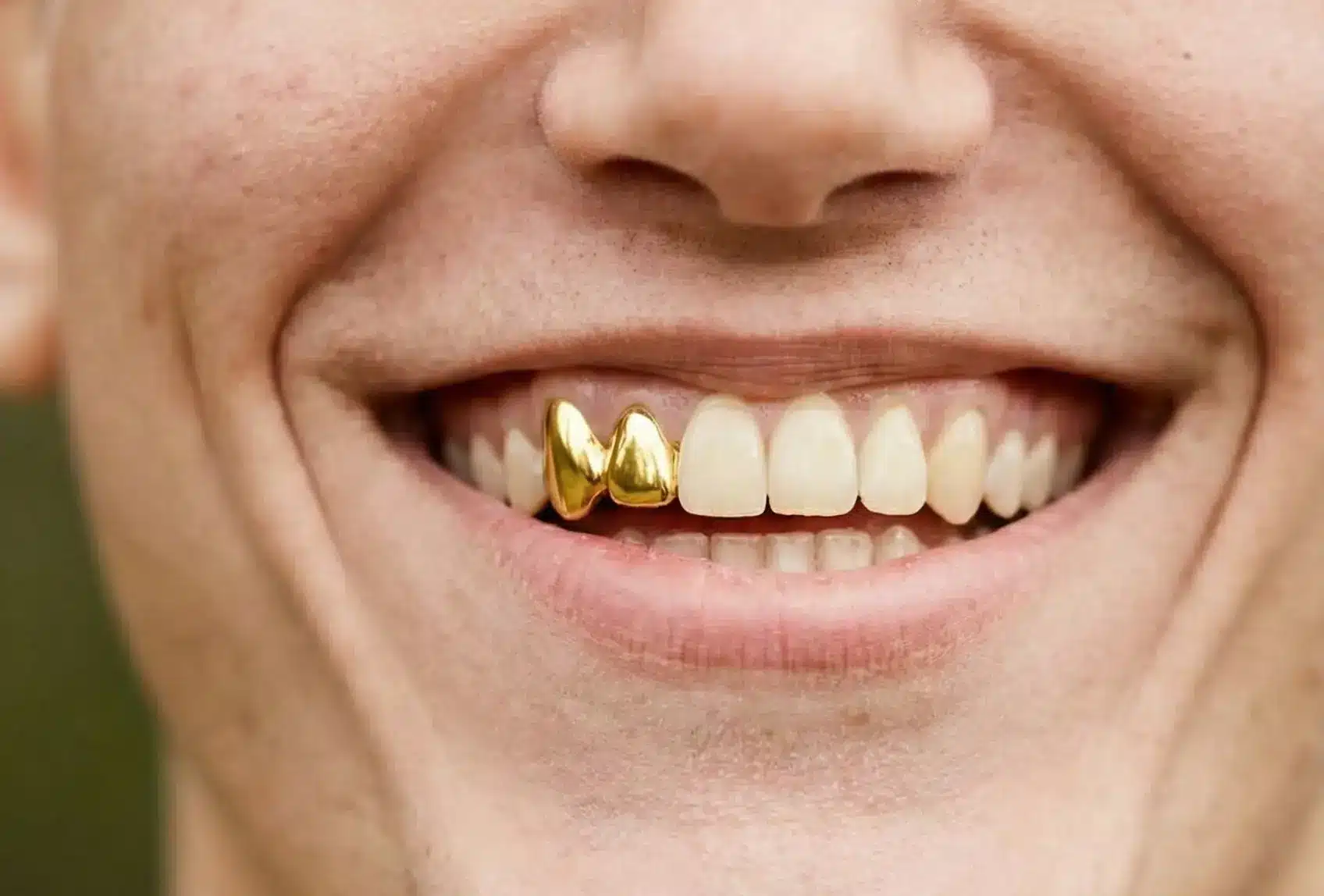
The image depicts a close-up of a dental model fitted with gold crowns across the upper teeth. The model is made from white plaster-like material — commonly used in dentistry to replicate a patient’s mouth for study or appliance fabrication. The gums are shown in pink, and the crowns display a shiny metallic finish, characteristic of gold material selected for its durability and biocompatibility.
Advantages of Gold Crowns
Gold crowns offer a range of meaningful benefits. They are renowned for their exceptional durability and ability to withstand the heavy forces of biting and chewing, making them an ideal solution for back teeth that experience significant wear. For patients with metal sensitivities, gold crowns are often a safer option, as they are typically crafted from a noble alloy that is unlikely to provoke allergic reactions.
Gold dental crowns offer several key advantages:
- Durability — Gold has excellent resistance to wear, making these crowns highly long-lasting. They are far less prone to cracking or chipping than porcelain or ceramic alternatives.
- Biocompatibility — Gold is generally well-accepted by the body, presenting minimal risk of allergic responses or adverse tissue reactions.
- Minimal Tooth Reduction — Preparing a tooth to receive a gold crown typically requires less removal of healthy tooth structure than other crown types.
- Corrosion Resistance — Gold crowns do not deteriorate over time, preserving their structure and appearance throughout their lifespan.
- Thermal Properties — Their conductivity is closer to natural tooth enamel, which helps reduce sensitivity to hot and cold temperatures.
- Distinctive Appearance — While they do not replicate the natural tooth colour, gold crowns have a unique visual character that many patients prefer for back teeth.
- Longevity — With appropriate care, gold crowns can remain functional for decades, frequently outlasting other crown materials.
- Accurate Fit — Gold’s workability allows for a highly precise fit, which is vital for maintaining comfort and long-term oral health.
The Look of Gold Tooth Crowns
Gold crowns do not replicate the appearance of natural teeth the way porcelain crowns do. Their distinctive metallic shine sets them apart visually and makes them more noticeable than tooth-coloured restorations. This visibility can be a concern, particularly for front teeth where aesthetics take priority. For patients who are conscious about the appearance of visible teeth, alternative crown materials may be worth discussing with your dentist for a more seamless result.
What to Expect During the Gold Crown Procedure
Receiving a gold dental crown typically takes place across a few stages. To begin, your dentist will prepare the affected tooth, reshaping it so the crown can sit securely over it. An impression of the prepared tooth and the surrounding teeth is then taken to ensure the crown will fit with accuracy. This impression is forwarded to a dental laboratory, where skilled technicians craft the crown from a gold alloy — generally a combination of gold and complementary metals. While the permanent crown is being fabricated, a temporary crown is placed over the tooth to protect it in the interim.
Once the laboratory returns the finished crown, it is seated over the prepared tooth and secured using a specialised dental cement, ensuring a firm and lasting bond.
Looking After Your Gold Tooth Crown
Caring for a gold crown is much the same as caring for your natural teeth. Maintaining a consistent routine of brushing and flossing is essential to keep the surrounding teeth and gums in good health.
Gold Tooth Crown Pricing: What You Should Know
A gold crown is among the more premium dental restorations, and the cost reflects this — primarily because gold is a traded commodity whose price moves similarly to gold bullion or jewellery.
The total cost is made up of two components:
1. The dentist’s fee — This covers all appointments, tooth preparation, impressions, crown fitting, and the clinical expertise required. This component is broadly comparable to other crown types.
2. The laboratory fee (the gold itself) — Your crown is individually crafted by a dental laboratory, which charges for both the workmanship and the raw gold used. The material cost alone can vary from a few hundred dollars to well over a thousand, depending on the specific alloy and prevailing gold prices.
Why does the gold content make a difference?
Consider it similar to purchasing gold jewellery — a lower-carat ring is noticeably less expensive than a higher-carat one, even if they appear almost identical. The same principle applies to dental crowns:
- Lower gold content (white/rose alloy) — more budget-friendly, still durable
- Moderate gold content (~40% gold) — a solid balance between cost and performance
- High gold content (~75%+ gold) — the premium tier, most traditional in nature
When both fees are combined, a gold crown generally costs somewhat more than a standard crown, and significantly more for a high-gold variant. Your dentist will provide a personalised written quotation based on the alloy that best suits your tooth.
Is a gold crown covered by dental insurance?
Many health insurance policies contribute toward the cost of a crown, but the level of coverage varies. Because gold crowns carry a higher price tag, some funds may only reimburse up to the equivalent cost of a standard crown such as porcelain. It is advisable to check with your insurer before proceeding — your dentist can also assist you in understanding your entitlements and how they apply to your treatment.
A straightforward note: gold crowns are a premium, long-lasting restoration. The cost reflects the clinical expertise involved as well as the genuine value of the material. Always request a written quote before committing.
Gold Crowns vs. Porcelain Crowns
Gold dental crowns and porcelain crowns differ significantly in both composition and function. Gold crowns, fashioned from a blend of gold, copper, and other metals, are exceptionally durable and generally require less removal of tooth structure than alternative crown types. Their strength makes them particularly well-suited for posterior teeth, and they typically enjoy a longer service life. However, their metallic appearance means they are less visually discreet. Porcelain crowns, on the other hand, are commonly the preferred option for front teeth due to their ability to replicate the natural colour of enamel. They can be colour-matched to adjacent teeth, though they are less robust than gold and may cause more wear on opposing teeth than metal or resin crowns. Porcelain crowns can also require a greater degree of tooth reduction to achieve a proper fit.
How Long Can You Expect a Gold Crown to Last?
Gold dental crowns are well regarded for their impressive lifespan. When properly cared for, they can remain fully functional for many decades. A well-fitted and consistently maintained gold crown can last 20 to 30 years or more — a longevity that stems from gold’s outstanding resistance to wear and its compatibility with oral tissues, which minimises unnecessary pressure on both the tooth and surrounding gum. That said, the actual lifespan of a gold crown depends on individual factors such as oral hygiene practices, bite habits, and how consistently a patient attends routine dental check-ups. Attentive care goes a long way in maximising the functional life of a gold crown.
Other Crown Options Available
There are several types of dental crowns beyond gold, each with its own strengths. The most appropriate choice often comes down to individual circumstances and your dentist’s clinical recommendation. Crowns are commonly placed following root canal therapy or as part of a dental implant restoration.
All-Porcelain or All-Ceramic Crowns
These are an excellent option for patients seeking a restoration that closely matches the colour of their natural teeth. Made entirely from porcelain or ceramic, they are a popular choice for front teeth. They contain no metal components, which makes them suitable for patients with metal sensitivities. However, they may not offer the same level of strength as metal-based alternatives.
Porcelain-Fused-to-Metal Crowns
Combining the structural strength of metal with the aesthetic qualities of porcelain, these crowns offer a practical middle ground. The metal substructure provides a solid foundation, while the porcelain overlay creates a natural-looking finish. They are generally stronger than all-porcelain crowns, though a thin metal line may become visible at the gum margin over time.
Zirconia Crowns
Known for their exceptional strength and resilience, zirconia crowns are crafted from a high-performance dental ceramic suitable for both front and back teeth. They are particularly useful in situations where the underlying tooth structure is compromised and needs robust support.
Composite Resin Crowns
These crowns are a more affordable option and can often be fabricated during a single dental visit, making them a convenient choice for temporary restorations. The material is moulded and hardened in place using a curing light. While they are not as long-lasting as other types, composite resin crowns can serve as a practical short-term or even permanent solution in certain circumstances, particularly when immediate restoration is a priority.
Stainless Steel Crowns
Stainless steel crowns are most frequently used in paediatric dentistry to protect and restore primary (baby) teeth. They are highly durable, cost-effective, and straightforward to place, making them a reliable solution for children’s dental needs.
Why Choose Our Practice for Your Gold Tooth Crown
If you are considering a gold tooth crown, our experienced dental team is here to guide you through every stage of the process. We are committed to providing personalised care and clear, honest guidance. We understand that selecting the right dental restoration is an important decision, and we take the time to ensure you have all the information you need to feel confident in your choice.
It is worth knowing that many dental procedures — including crown placement — can be performed under twilight sedation or even full general anaesthesia for patients who experience dental anxiety. Ask us about sedation options available at our practice.
Flexible payment arrangements are also available, and for eligible treatments, accessing superannuation early to fund dental work may be an option worth exploring. Our team can discuss what financial arrangements best suit your circumstances.
Our skilled clinicians use modern techniques and premium-quality materials to ensure your gold crown is both functional and professionally finished. We take the time to understand your preferences and oral health goals, so we can recommend the solution that works best for you.
Contact us today to schedule a consultation and find out how we can help you restore your smile with confidence.