
Dental Anxiety Symptoms Explained in Carindale
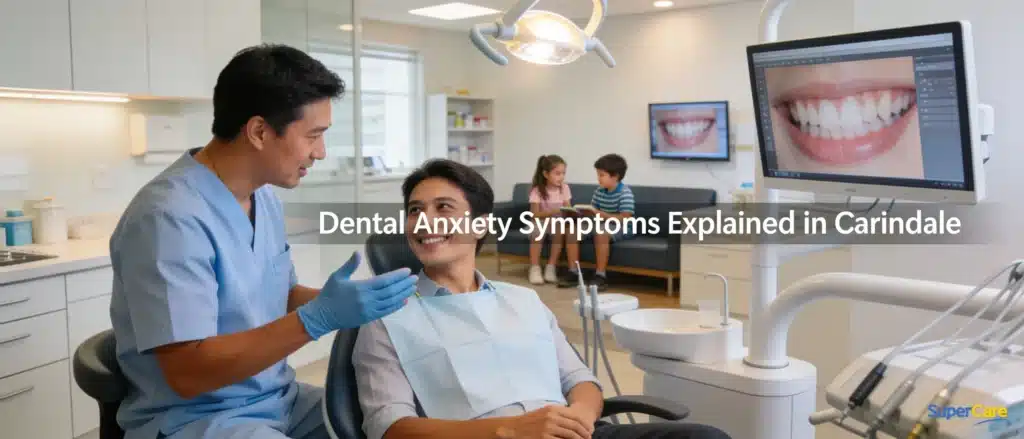
Dental Anxiety Symptoms Explained in Carindale
By Dental Nook Editorial Team · Updated 2026-07-13
Dental anxiety symptoms among Carindale residents range from mild discomfort to severe dental phobia, a condition that significantly affects a patient’s ability to receive necessary care. Common signs include persistent avoidance of appointments, physical tension, and heightened distress before or during treatment. Dental Nook provides reassuring, patient-focused care to address these responses effectively.
Key Takeaways
- Dental anxiety ranges from mild nervousness to severe dental phobia, which may require varying levels of treatment support.
- Physical symptoms include elevated pulse rate, sweating, and nervous stomach during dental visits.
- Dr. Nikita Verma at Dental Nook Carindale helps patients manage dental anxiety effectively.
- Dental Nook is open Monday to Wednesday from 9:00 AM to 5:00 PM.
What Are the Common Dental Anxiety Symptoms?
Dental anxiety symptoms and solutions begin with recognizing the physical and emotional warning signs that prevent patients from seeking necessary care. Left unaddressed, dental anxiety causes patients to delay or avoid treatment entirely — allowing oral health conditions to worsen over time.
Dental anxiety manifests across a wide spectrum, from mild unease to severe dental phobia. Common physical symptoms include:
- Elevated pulse rate and heart palpitations before or during appointments
- Sweating, even in a cool clinical environment
- Nervous stomach, including nausea or gastrointestinal discomfort
- A general feeling of dread when thinking about visiting a dental practice
How Does Dental Anxiety Affect a Patient's Ability to Receive Care?
Dental anxiety ranges from mild discomfort to severe dental phobia. Both ends of the spectrum significantly affect a patient’s ability to receive necessary care. Patients who avoid routine appointments risk compounding minor issues into complex, costly procedures.
Does Dental Anxiety Affect Children Differently Than Adults?
Dental anxiety affects both adults and children. Children are particularly susceptible because parental fears and attitudes toward dental treatment directly influence how children perceive dental visits. Carindale families seeking compassionate care can access Dental Nook’s patient-centered services. Are designed to address anxiety at every age through gentle, modern clinical approaches.
What Causes Dental Anxiety in Carindale Patients?
Dental anxiety symptoms and solutions begin with understanding the root triggers. Past negative experiences — particularly those from childhood — rank among the most commonly reported causes of fear toward dental visits.
What Are the Most Common Triggers of Dental Anxiety?
Dental anxiety triggers vary from patient to patient, but several patterns appear consistently:
- Past bad experiences, often originating in childhood, leave lasting associations between dental settings and pain or distress
- Needles and drills provoke fear responses even before a procedure begins
- The anticipation alone — simply thinking about an upcoming appointment — causes measurable anxiety in many patients
Avoiding dental care because of these triggers carries real consequences. Untreated oral health conditions worsen over time, turning manageable problems into complex, costly procedures.
Does the Dental Environment Itself Cause Fear?
The sights, sounds, and smells of a dental clinic independently trigger anxiety responses in many patients. The sound of a drill or the sight of a needle causes a fear response before any physical sensation occurs. For Carindale residents, proximity to a supportive dental provider matters. Dental Nook operates from Westfield Carindale Shopping Center, offering appointments across the week, including weekends when required, to accommodate patients who struggle to attend during standard hours.
How Can Carindale Residents Manage Dental Anxiety?
Dental anxiety symptoms and solutions are well-documented, and most cases respond to straightforward strategies. Avoiding dental care because of anxiety causes oral health to deteriorate — a loss that compounds over time and leads to more complex, costly treatment.
What Strategies Help Patients Manage Dental Anxiety?
Open communication with a dental team is the most effective first step for Carindale residents experiencing anxiety. Simple coping strategies — adopted before and during appointments — reduce fear significantly for most patients. Practical approaches include:
- Communicating concerns to the dental team before treatment begins
- Practicing controlled breathing techniques in the waiting room
- Requesting a signal system to pause treatment at any point
- Scheduling appointments during low-stress times of day
When Should a Patient Seek Professional Psychological Support?
When anxiety prevents a Carindale resident from attending dental appointments altogether, speaking with a psychologist or counsellor helps address the underlying fear directly. Professional psychological support is appropriate when self-management strategies alone prove insufficient. A mental health professional works alongside the dental team to build a sustainable path back to regular care.
Dental Nook serves Carindale patients with a dedicated focus on transforming dental visits into positive, stress-free experiences through compassionate, patient-centered care. Carindale residents can reach Dental Nook by phone at 07 3124 0248 or by email at info@dentalnook.com.au to discuss anxiety management options before booking.
FAQ
What physical symptoms indicate dental anxiety?
Physical symptoms include elevated pulse rate, heart palpitations, sweating. A nervous stomach with nausea or gastrointestinal discomfort during or before dental appointments.
Does dental anxiety affect children as well as adults?
Dental anxiety affects both adults and children, with children particularly susceptible because parental fears. Attitudes toward dental treatment directly influence how children perceive dental visits.
How do patients in Carindale access care at Dental Nook for dental anxiety?
Dental Nook, led by Dr. Nikita Verma, operates Monday to Wednesday from 9:00 AM to 5:00 PM. Offers patient-centered, compassionate care designed to address anxiety at every age.