
Managing Dental Anxiety: Stress-Free Visit Techniques
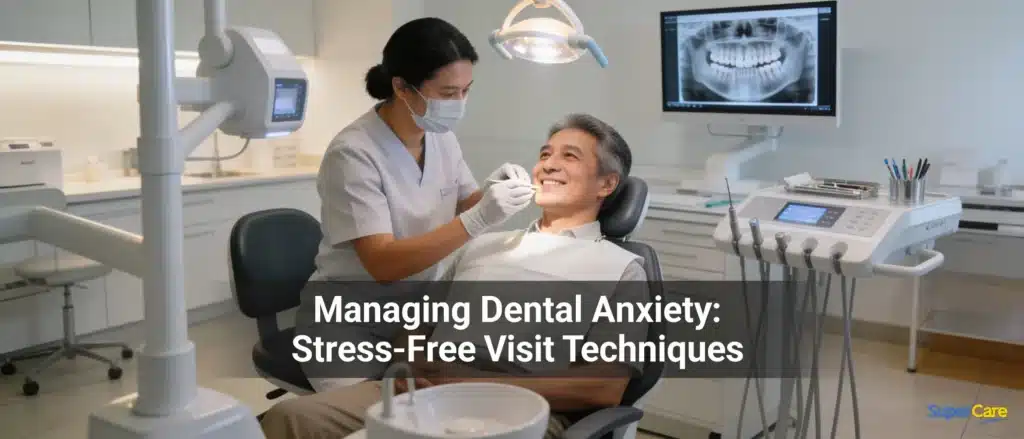
Managing Dental Anxiety: Stress-Free Visit Techniques
By Dental Nook Editorial Team · Updated 2026-07-13
Dental anxiety affects millions of patients globally, causing many to delay essential care until problems escalate. Effective management techniques include open communication with the dental team, relaxation breathing, and sedation options. Dental Nook in Carindale identifies patient concerns at the earliest opportunity, addressing fears through personalized care strategies that support stress-free, comfortable visits for anxious patients.
Key Takeaways
- Many dentists report an increase in patients with stress-related teeth grinding and clenching.
- Deep breathing exercises actively lower heart rate and reduce tension before dental procedures begin.
- Dr. Nikita Verma at Dental Nook tailors evidence-based anxiety management strategies for every patient.
- Communicating fears openly to your dentist reduces stress and improves the overall treatment experience.
Why Does Dental Anxiety Stop People Seeking Care?
Dental anxiety causes patients to avoid dental care entirely — and dental offices encounter dental anxiety and phobia as a frequent, recurring challenge. When anxiety goes unaddressed, patients delay treatment until conditions escalate into painful, costly emergencies.
Dental anxiety spans a wide spectrum:
- Mild apprehension — nervousness before appointments, manageable with reassurance
- Moderate anxiety — avoidance of routine check-ups, leading to worsening oral health
- Intense dental phobia — complete refusal of treatment, regardless of pain or risk
What Causes Dental Anxiety in the First Place?
Dental anxiety typically stems from previous negative encounters, fear of discomfort, feelings of powerlessness in the dental chair. Shame about oral hygiene. Each of these triggers reinforces avoidance behavior, creating a cycle that worsens oral health over time.
How Do Relaxation Techniques for Dental Visits Help Break the Cycle?
Relaxation Techniques for Dental Visits interrupt the anxiety-avoidance pattern by giving patients practical tools to manage fear before and during appointments. Dental Nook dedicates its practice to transforming dental care into a positive, welcoming, and stress-free experience. Identifying anxious patients early and addressing their concerns directly allows the care team to tailor each visit around patient comfort and safety.
What Relaxation Techniques for Dental Visits Actually Work?
Relaxation Techniques for Dental Visits that consistently deliver results include controlled breathing exercises and mindfulness-based strategies — both of which patients and dental teams actively use to reduce stress during appointments. Patients who skip these tools risk allowing anxiety to escalate, turning a routine visit into an overwhelming experience that delays necessary care.
Dental anxiety exists on a spectrum, ranging from mild unease to severe phobia. Without an appropriate strategy, anxiety causes patients to postpone treatment until conditions worsen significantly. The reassuring reality is that dental anxiety responds well to structured support, allowing patients to receive necessary care without overwhelming fear.
Which Breathing Techniques Help Most During a Dental Appointment?
Controlled breathing is one of the most accessible relaxation tools available. A basic deep-breathing exercise — slow inhalation, a brief pause, and a measured exhale. Lowers the body’s stress response before and during treatment. Dental teams at patient-centered practices actively guide patients through these exercises to create a calmer clinical environment.
Effective techniques patients can apply include:
- Diaphragmatic breathing: Slow, deep breaths that engage the lower lungs
- Box breathing: Inhale, hold, exhale, and pause for equal counts
- Mindful body scanning: Directing attention to physical sensations to interrupt anxious thought patterns
When Should a Patient Seek Additional Help for Dental Anxiety?
When anxiety prevents a patient from attending appointments entirely, speaking directly with a dentist about available options is the recommended first step. Referral to a psychologist or counsellor may be appropriate for more persistent cases. Dental Nook, located in Carindale, provides a compassionate, technology-forward environment specifically designed to support anxious patients through every stage of their care.
How Can Your Dental Team Help Manage Your Anxiety?
A dental team manages patient anxiety by identifying concerns early, applying evidence-based strategies, and removing scheduling barriers that cause avoidance. Without structured intervention, unmanaged dental anxiety becomes a significant source of stress for both patients and dental practitioners.
Relaxation Techniques for Dental Visits work best when the dental team first understands the nature and severity of a patient’s anxiety. Dental Nook’s practitioners identify anxious patients through initial interactions, structured interviews, and standardized fear and anxiety self-reporting scales — allowing the team to categorize each patient’s concerns and tailor an appropriate care approach.
Why Does Early Identification of Anxiety Matter?
Early identification allows the dental team to formulate acceptable, evidence-based therapies before treatment begins. Patients whose anxiety goes unrecognized face a higher risk of avoidance, which allows oral health conditions to escalate unnecessarily.
How Does Flexible Scheduling Reduce Dental Anxiety?
Scheduling barriers are a leading reason anxious patients delay care. Dental Nook, located at Westfield Carindale Shopping Center, offers convenient online booking alongside extended hours. Including after-hours, after-school, and potential Sunday appointments. Patients can reach the practice at 07 3124 0248 or info@dentalnook.com.au to discuss appointment options that reduce scheduling-related stress.
FAQ
What causes dental anxiety in patients?
Dental anxiety typically stems from previous negative encounters, fear of discomfort, feelings of powerlessness in the dental chair. Shame about oral hygiene, each reinforcing avoidance behavior that worsens oral health over time.
Which relaxation technique helps most during a dental appointment?
Controlled breathing — slow inhalation, a brief pause, and a measured exhale. Lowers the body’s stress response before and during treatment, and dental teams actively guide patients through these exercises.
How does Dental Nook support anxious patients?
Dr. Nikita Verma at Dental Nook tailors evidence-based anxiety management strategies for every patient, identifying concerns early. Addressing fears through personalized care strategies that support comfortable, stress-free visits.