
Managing Your Child’s Dental Anxiety
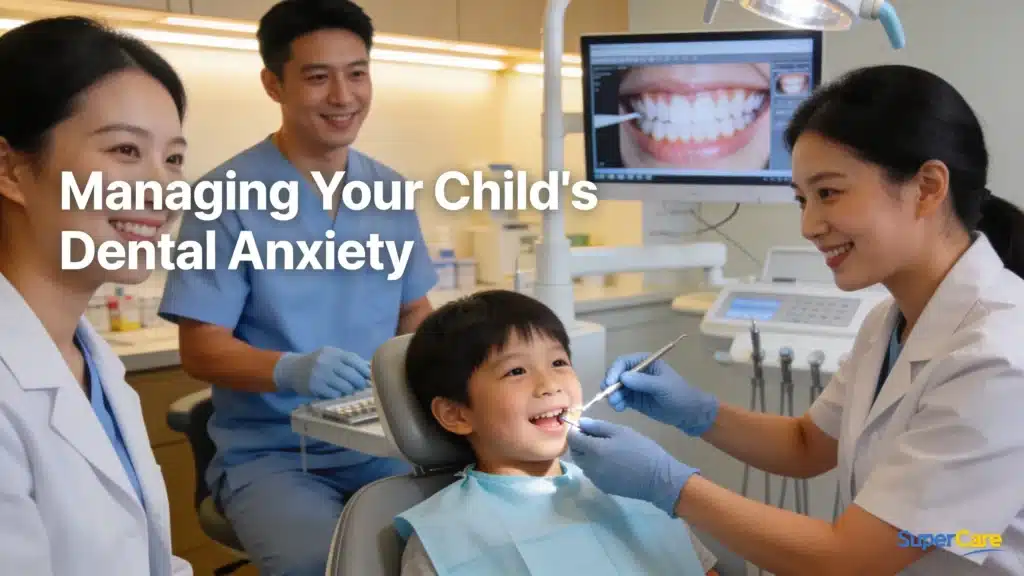
Managing Your Child's Dental Anxiety
By Dental Nook Editorial Team · Updated 2026-07-13
Effective dental anxiety management for children starts at home. Parents use techniques like positive reinforcement, role-playing dental visits, and reading books about dentistry to build familiarity. Non-pharmacological interventions — including tell-show-do methods and distraction strategies — are proven approaches. For personalised guidance, contact Dental Nook in Carindale, Queensland, at 1800 930 336.
Managing children’s dental anxiety begins before the appointment. Parents benefit from using calm, positive language when discussing dental visits, avoiding words like “pain” or “needle.” Past experiences, fear of the unknown. Family influences drive anxiety in children. Gentle, modern dental environments — like those Dental Nook provides in Brisbane — support anxious young patients effectively.
Key Takeaways
- Dental anxiety in children stems from 3 main sources: past experiences, fear of the unknown, and media influences.
- Non-pharmacological techniques effectively reduce children’s dental anxiety without relying on sedation or medication.
- Parents who model calm behavior before appointments directly lower their child’s stress response at the dentist.
- Dr. Nikita Verma at Dental Nook Carindale uses child-friendly approaches to build positive dental visit experiences.
What Do Parents Need Before Starting?
Managing Dental Anxiety in Children begins with understanding what dental anxiety actually is. Dental anxiety is a state of apprehension that something dreadful is going to happen in relation to dental treatment — and dental anxiety is typically coupled with a sense of losing control.
Parents benefit from recognizing the three primary sources of this anxiety before a first appointment:
- Past experiences that left a negative impression
- Fear of the unknown about procedures and clinical environments
- Family or media influences that shape a child’s expectations
What Causes Dental Anxiety in Children?
Dental anxiety in children stems from past experiences, fear of the unknown, and family or media influences. When parents inadvertently express their own dental fears, children absorb those signals and arrive at appointments already apprehensive.
How Can Scheduling Help Reduce a Child's Dental Stress?
Timing an appointment strategically removes one layer of anxiety before the visit begins. Dental Nook is a Carindale dental clinic offering appointments Monday to Wednesday from 9:00 AM to 5:00 PM. Booking at a time when a child is rested and unhurried. Rather than rushed after a long school day — supports a calmer, more cooperative experience.
Which Non-Pharmacological Techniques Work Best?
Managing Dental Anxiety in Children through non-pharmacological interventions is an evidence-based approach that reduces fear without reliance on sedation or medication. Failing to address dental anxiety early causes children to carry those fears into adulthood, disrupting healthy oral habits for life.
Non-pharmacological techniques work by reshaping a child’s emotional response to the dental environment before disruptive or non-compliant behaviors take hold. Dental clinics committed to compassionate, stress-free care. Such as Dental Nook in Carindale, Brisbane — build these strategies into every patient interaction.
What are the most effective non-pharmacological techniques for anxious children?
The following approaches are recognized for reducing dental anxiety in pediatric patients:
- Tell-Show-Do — Explain the procedure in simple language, demonstrate the instrument, then perform the action. Complete each step before moving to the next.
- Positive reinforcement — Acknowledge calm behavior immediately after it occurs. Praise specific actions rather than offering vague encouragement.
- Distraction techniques — Introduce audiovisual tools or guided imagery before the procedure begins. Ensure the distraction is age-appropriate.
- Gradual exposure — Schedule a low-stakes introductory visit first. Reserve clinical treatment for a subsequent appointment once comfort is established.
- Parental involvement — Confirm with the treating practitioner whether a parent’s presence during the appointment reduces or increases the child’s anxiety before proceeding.
Why does early intervention matter for long-term oral health?
Disruptive or non-compliant behavior during dental visits is a recognized manifestation of dental fear, anxiety, or phobia in children. Addressing anxiety at the first signs prevents avoidance patterns from becoming entrenched. Dental Nook prioritizes transforming each visit into a welcoming, positive experience so that children build lasting confidence in dental care.
How Can Parents Troubleshoot Persistent Dental Fear?
Managing Dental Anxiety in Children requires a structured, proactive approach from parents and dental professionals working in partnership. Unaddressed dental fear causes children to avoid care entirely, creating long-term oral health consequences that compound over time.
Dental anxiety is a complex psychological reaction in the developing minds of children — not simply a behavioral inconvenience. Recognizing this distinction changes how parents respond.
Prerequisites: Confirm the child has no underlying medical conditions affecting anxiety before beginning these steps.
- Identify the trigger. Observe whether fear stems from past experiences, unfamiliar environments, or family attitudes toward dental visits.
- Use positive, neutral language. Avoid words like “pain” or “needle” when discussing appointments.
- Schedule a low-pressure introductory visit. Allow the child to meet the dental team without undergoing treatment.
- Contact a trusted provider directly. Dental Nook’s principal dentist, Dr. Nikita Verma, can be reached at 1800 930 336 or info@dentalnook.com.au to discuss tailored strategies.
When Should Parents Seek Professional Guidance for a Child's Dental Fear?
Parents should seek professional support when a child’s anxiety consistently disrupts appointments or daily routines. Dental Nook’s experienced team provides individualized care plans designed to address each child’s specific psychological and clinical needs.
What Happens If Dental Anxiety Goes Untreated?
Neglecting dental anxiety leads to avoidance of care and serious long-term oral health issues. Early intervention protects both the child’s dental health and emotional well-being.
Managing a child’s dental anxiety is a journey that unfolds gradually through consistent, positive experiences and thoughtful parental involvement. By combining open communication, desensitization strategies. The support of a compassionate dental team, parents transform routine appointments into opportunities for building lifelong confidence in oral health care. At Dental Nook, Dr. Nikita Verma and our experienced team remain committed to creating a gentle, reassuring environment where every child feels safe, respected. Empowered to embrace a healthy smile.
FAQ
What causes dental anxiety in children?
Dental anxiety stems from three sources: past negative experiences, fear of the unknown about procedures. Family or media influences that shape a child’s expectations before an appointment.
How do parents reduce their child's stress before a dental visit?
Parents who use calm, positive language and avoid words like “pain” or “needle” directly lower their child’s stress response. Children absorb and mirror the anxiety signals adults express.
Where do families in Brisbane access child-friendly dental care for anxious children?
Dr. Nikita Verma at Dental Nook in Carindale, Queensland, uses child-friendly approaches to build positive dental visit experiences. Families reach the clinic at 1800 930 336.