
Table of Contents

What Is Periodontal (Gum) Therapy?
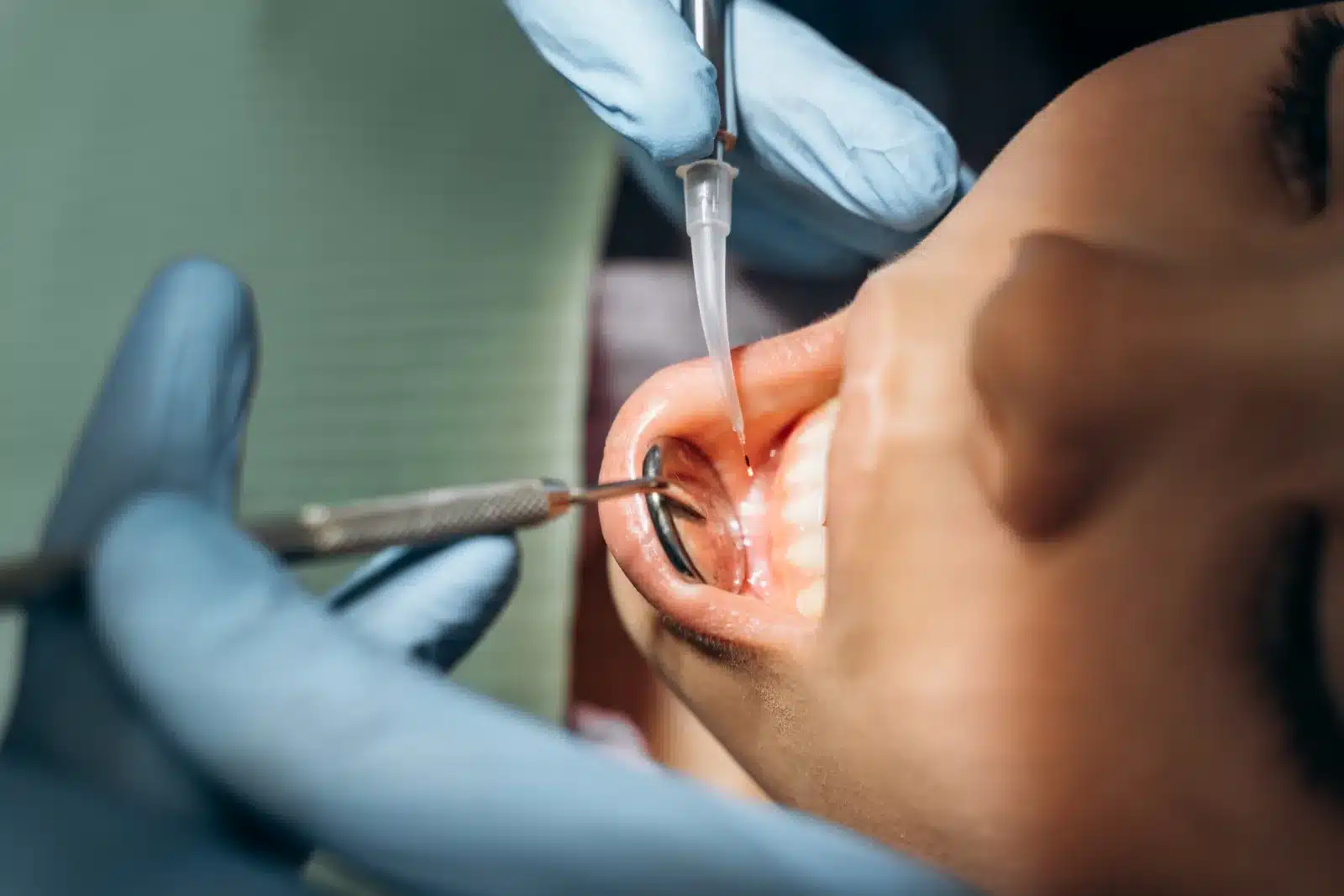
Periodontal disease involves the progressive destruction of the jawbone that anchors your teeth in place — and this bone loss cannot be undone. If too much supporting bone is destroyed, the affected teeth will become mobile and will eventually be lost. People with periodontal disease have an excessive concentration of inflammation-causing bacteria around their teeth that the body’s immune defences are unable to keep in check. These bacteria colonise the tooth roots in a layered film known as a “biofilm,” residing both above and beneath the gum margin within the pocket of tissue surrounding each tooth. Hardened bacterial deposits — known as calculus or tartar — make it practically impossible to clear this biofilm without professional intervention in the form of scaling and debridement.
gold tooth

Stages of Periodontal Disease

Periodontal disease moves through two main phases — gingivitis and periodontitis — and identifying which stage a patient is in helps determine the most appropriate treatment pathway.

Gingivitis

Gingivitis is the earliest and most manageable form of gum disease. It typically presents as gums that are red, swollen, and prone to bleeding. At this stage, the teeth remain solidly anchored in their sockets and no bone damage has yet occurred. Gingivitis can generally be reversed through a combination of improved daily oral hygiene and a professional clean carried out by a dental hygienist.

Periodontitis

When gingivitis goes untreated, it can advance into periodontitis — a more destructive phase in which the bone holding the teeth in the jaw begins to break down. This can cause teeth to loosen and, without intervention, lead to tooth loss. Unlike gingivitis, the bone lost through chronic periodontitis cannot be regenerated. However, with appropriate periodontal treatment, the rate of progression can be slowed considerably or brought to a halt.

Symptoms of Gum Disease

Healthy gum tissue is firm, well-coloured, and does not bleed when you brush or floss. If you notice any of the following, gum disease may be present:
  • Gums that appear swollen or feel puffy
  • Gums that have changed colour — becoming redder or darker than usual
  • Bleeding when brushing or flossing
  • Ongoing bad breath or a persistent unpleasant taste in the mouth
  • Heightened sensitivity, particularly to temperature changes
  • Pus visible between the teeth and gum tissue
  • Teeth that feel mobile or have shifted position
  • Gums that appear to be receding — pulling away from the teeth
  • Changes in how dentures sit or how the teeth come together when biting
If you are experiencing any of these signs, arranging a dental assessment promptly is important to prevent the condition from worsening. Contact our clinic to book an appointment.

What Causes Gum Disease?

The fundamental cause of periodontal disease is the accumulation of dental plaque — the soft, sticky film of bacteria that constantly forms across tooth surfaces. When plaque is not consistently removed through brushing and flossing, it gradually mineralises into a hard deposit called tartar (calculus).
Tartar builds up both above and below the gumline and cannot be cleared by brushing alone — it requires professional removal at a dental appointment. When tartar is left in place, it chronically irritates the surrounding gum tissue and creates an environment in which harmful bacteria proliferate, triggering the inflammatory response that ultimately damages bone.

Risk Factors for Gum Disease

While periodontal disease is widespread, certain factors heighten an individual’s vulnerability
  • Inadequate oral hygiene — infrequent or ineffective brushing and flossing enables plaque to build up unchecked
  • Tobacco use — one of the most significant risk factors for gum disease and a leading reason why treatment outcomes are less predictable
  • Genetic predisposition — a family history of periodontal disease can increase susceptibility
  • Diabetes — people living with diabetes face an elevated risk of infections, including those affecting the gums
  • Certain medications — some drugs, including corticosteroids and certain chemotherapy agents, can negatively affect gum health
  • Hormonal changes — such as those occurring during pregnancy or as a result of oral contraceptive use
  • Chronic stress — can impair the immune system’s ability to manage bacterial infection effectively
  • Vitamin C deficiency
If any of these risk factors apply to you, or if there is a family history of gum disease, more frequent dental check-ups are particularly worthwhile for early detection.

What Is the Aim of Periodontal Therapy?

The primary objective of periodontal treatment is to make every tooth surface as clean and smooth as possible by thoroughly removing all calculus from the tooth roots and eliminating any rough edges on existing restorations. Areas where food tends to become trapped or lodged also need to be addressed as part of the treatment process.
Once the tooth surfaces have been cleaned and smoothed, the responsibility shifts to the patient — maintaining thorough daily cleaning using a toothbrush, dental floss, and interdental (Pikster) brushes. Detailed instruction on the correct technique will be provided.

What Happens During Periodontal (Gum) Therapy?

Under local anaesthesia, all calculus deposits are meticulously removed from the tooth roots using a combination of ultrasonic instruments and hand scalers. Rough margins on existing fillings are refined using polishing instruments. Where old restorations are contributing to food trapping, they may need to be replaced or reshaped.

Antibiotic Therapy

In patients with more severe disease or those in a high-risk category, a course of antibiotics may be prescribed. These are typically taken one hour before the treatment session commences. It is important to note that some antibiotics interact adversely with alcohol — a period of five days without alcohol may be required while completing the course. Pain relief medication (such as paracetamol, ibuprofen, or codeine) may also be recommended before and after the appointment to keep you comfortable during and after the procedure.

For patients who experience significant apprehension about dental treatment, a mild oral sedative (such as diazepam) can be prescribed to be taken approximately one hour before the appointment. If you take this medication, you will be unable to drive or operate machinery for the remainder of that day and will need a responsible adult to escort you to and from the appointment.

During Treatment

Once the local anaesthetic has taken full effect, you should feel no pain during the procedure. Every measure is taken to ensure your comfort throughout. In some cases, dissolving sutures may be placed to encourage optimal healing of the gum tissue.

Immediately After Treatment

You will still be quite numb following the procedure and should avoid eating until sensation has fully returned, to prevent accidentally biting your cheek, lip, or tongue. For some patients, the numbness may persist for several hours after leaving the clinic.

The Rest of That Day

Avoid any strenuous physical activity on the day of treatment, as exertion can increase both pain and the risk of bleeding. Soft, nutritious foods are recommended. Hot, cold, and acidic foods and drinks should be avoided for the first few days while the treated area is settling.

That Night

Use any prescribed mouthwash as directed and take pain relief medication if needed, but do not brush the teeth that were treated on the evening of the procedure — they will be too tender.

The Following Day

Resume use of the prescribed rinses in the morning and evening, and continue taking any antibiotics as instructed. Begin cleaning gently but thoroughly — paying particular attention to dental floss and interdental brushes. THIS STEP IS CRITICAL TO SUCCESS. An electric toothbrush may feel too uncomfortable initially, so a soft manual toothbrush is recommended until sensitivity settles.

Post-Treatment Sensitivity

Sensitivity to hot and cold — particularly cold — is very common in the days and weeks following periodontal treatment. This discomfort will gradually diminish, provided you clean as instructed and use the recommended fluoride mouthwash consistently.

In areas where bone loss was most significant and pocketing was deepest, you may notice gum shrinkage, which can cause gaps to appear between the teeth. This is an unavoidable and permanent outcome of treating advanced disease — the gum recedes as the inflammation resolves. The bone lost to the disease will not return, but treatment can prevent further deterioration from occurring.

gold tooth

Three-Month Review

Approximately three months after treatment, a review appointment is scheduled. This typically involves a light clean of all teeth to remove any newly accumulated deposits and an assessment of how the gum tissue has responded. Any areas that remain inflamed can be identified and retreated at this stage.

Long-Term Periodontal Maintenance

Ongoing professional cleaning on a regular basis is essential to the long-term success of periodontal treatment. Depending on the severity of the disease and the standard of home care, maintenance appointments may be required every three, four, or six months. The better a patient cleans and flosses at home, the less frequent these professional visits need to be.
Maintenance cleans are typically performed by a dental hygienist to help manage costs. Research consistently shows that the most common reason for periodontal treatment failing over the long term is patients not attending regular maintenance appointments.

Continuing to smoke after treatment is also a well-documented cause of treatment failure.

Surgical Treatment Options

Where non-surgical approaches such as scaling and root planing are insufficient to adequately reduce the depth of periodontal pockets, surgical procedures may be considered. These are typically reserved for moderate to advanced cases of disease.

Flap Surgery (Pocket Reduction Surgery)

This procedure involves making a small incision in the gum tissue to create a flap, which is lifted to allow the dentist direct access to clean the tooth roots and address any underlying bone damage more thoroughly. Once the deposits and damaged tissue have been cleared, the flap is repositioned and secured with sutures.

Gum Grafting

Gum grafting is used to treat recession where the gum tissue has pulled back, leaving tooth roots exposed. A small section of tissue — sourced from the palate or another suitable donor area — is attached to the affected site to cover the exposed root surface and help prevent the recession from progressing further.

Bone Grafting

When periodontal disease has caused significant loss of supporting bone, a bone graft may be used to encourage regeneration of the lost structure. This procedure may also be necessary as a preparatory step before dental implant placement, particularly when teeth have already been lost and the bone has deteriorated.

Guided Tissue Regeneration (GTR)

GTR involves placing a specially designed biocompatible membrane between the gum tissue and the bone to act as a barrier. This prevents soft tissue from occupying the space needed for bone regrowth, directing the body’s healing response towards regenerating new bone in areas where it has been lost.

Any surgical or invasive procedure carries inherent risks. Before proceeding, it is advisable to seek a second opinion from a suitably qualified health professional.

The Impact of Smoking on Periodontal Treatment

The evidence is clear — most smokers do not heal as predictably as non-smokers or those who have successfully quit. Periodontal treatment in smokers tends to be associated with greater post-operative sensitivity, more discomfort during healing, and less reliable outcomes overall. Patients who are unable to stop smoking are strongly encouraged to reduce their intake as much as possible before commencing treatment, with the understanding that results may be less successful. Research suggests that very low-level smoking — fewer than five cigarettes per day — has a modest impact on healing, but these patients must maintain near-perfect home care.
Our recommendation is to cease smoking entirely — ideally for at least one month before treatment begins — to give the immune system in your mouth the best possible opportunity to recover and allow the gum tissue to heal well.

Periodontal Disease and Your General Health

There is clear medical evidence that advanced periodontal disease is an independent risk factor for heart disease, in much the same way that smoking, excess weight, and elevated cholesterol are recognised risk factors. Bacteria originating in the mouth have been identified in cardiac tissue in patients who have suffered heart attacks. This occurs because in advanced and very advanced disease, the sheer volume of bacteria around the teeth allows them to enter the general bloodstream — a phenomenon known as bacteraemia or blood-borne infection.
This does not mean that periodontal disease will inevitably cause a heart attack, but it does underscore that severe gum disease has consequences that extend well beyond the mouth.

Other Systemic Connections

Beyond its relationship with cardiovascular disease, research has linked advanced periodontal disease with an elevated risk of complications associated with diabetes, adverse pregnancy outcomes — including premature birth and low birth weight — and stroke. While gum disease alone is not the direct cause of these conditions, maintaining gum health is an important component of protecting your broader wellbeing.
A considerable number of patients with advanced or very advanced disease report feeling noticeably better in themselves following treatment — with many noting that they had been feeling persistently run down, fatigued, and low in energy prior to receiving care.
gold tooth

Frequently Asked Questions

What happens if I choose not to treat the disease?
Periodontal disease is progressive in nature. Without treatment to bring the bacteria on the tooth roots under control, bone loss will continue. In almost every case, the disease advances through successive stages — from early to moderate, to advanced, and eventually to very advanced. The rate of deterioration typically accelerates as the disease reaches the advanced and very advanced stages.
The most commonly reported positive outcomes include teeth that feel noticeably cleaner and smoother, gums that no longer bleed, reduced gum tenderness, resolution of bad breath, and teeth that are easier to clean and floss. Many patients simply describe their teeth as feeling significantly better overall.
The most commonly reported negatives in the weeks following treatment include sensitivity to cold for a week or more, tenderness when chewing for the first week, sore gums in the initial days, the appearance of gaps between teeth in the areas of greatest bone loss, and food catching in the wider interdental spaces as the gum tissue heals. Rebates from health funds can also be lower than expected.
No. Global periodontal research consistently demonstrates that antibiotics taken in isolation — without thorough mechanical removal of calculus from the tooth roots — are ineffective at arresting the disease and may in fact trigger a periodontal abscess.
Treatment of early and moderate disease is typically very successful when both the dentist and patient fulfil their respective roles well. Advanced disease is less predictable and requires patients to maintain an exceptionally high standard of home care — average cleaning may not be sufficient in some cases. Very advanced disease, where teeth are already noticeably mobile, is the hardest to treat. Outcomes depend almost entirely on the patient’s dedication to cleaning. While severely damaged teeth may be retained for a number of years, some will inevitably be lost at one, two, five, or ten years. It is generally unlikely that these teeth will last a lifetime — there is simply too little bone remaining.
Extraction would certainly eliminate the periodontal disease — but along with it, all your teeth. Many people find dentures far more challenging to manage than anticipated, particularly for eating, and some patients are simply unable to tolerate them at all. Extracting healthy or salvageable teeth to avoid treatment is not a decision to be taken lightly.
When a tooth has become very loose, there is insufficient bone remaining to support it under normal biting forces. In some cases — particularly for front teeth — it may be possible to bond the tooth to an adjacent tooth using tooth-coloured resin as a temporary measure to prevent it from being lost immediately. This is less feasible for back teeth.
In patients with periodontal disease, every millimetre of every root surface must be cleared of calculus — a full 360 degrees around each tooth, front and back, both above and below the gum margin. Back teeth are particularly challenging to access, especially wisdom teeth. Many patients require sessions of two to three hours for the upper teeth and a further two to three hours for the lower teeth.
This varies between individuals, but the back teeth almost always show more damage than the front. This is because they are harder to clean thoroughly with a toothbrush and floss and have typically harboured bacteria for longer periods.
Yes. Some individuals appear to have immune systems that are well-equipped to suppress periodontal bacteria and never develop significant disease. Research suggests that around 10% of the population is susceptible to severe periodontal disease. Factors associated with higher susceptibility include a family history of the condition, diabetes, thyroid disorders, and immune system deficiencies. Some tooth shapes also naturally accumulate more plaque than others.
Smoking is a major factor in driving disease progression and worsening outcomes.
Certain population groups — including some Asian communities — carry a particularly elevated genetic risk. However, the majority of people can develop periodontal disease if sufficient bacterial deposits are allowed to accumulate around their teeth over time.
No. Because the bacteria that drive periodontal disease cannot survive in a healthy oral environment, any bacteria that pass between individuals will not take hold unless that person’s mouth already harbours the same disease.
Health fund rebates vary considerably. Many funds classify periodontal treatment as a lower priority and offer relatively modest rebates, while others may cover a much higher proportion of costs. We will provide you with a detailed, itemised cost estimate before treatment begins so that you can verify your specific entitlements with your fund ahead of time.
In most cases, gum disease progresses slowly enough that a modest delay in commencing treatment makes little meaningful difference. That said, beginning treatment as soon as practical is always preferable. If you are experiencing acute pain or active infection, prompt care is important. Where patients need time to arrange their schedule, finances, or to work towards quitting smoking beforehand, a delay of a few months is generally acceptable. What matters most is that when treatment does take place, it is carried out correctly and thoroughly by both the clinician and the patient.

Request an Appointment Online

Please note that this is not an actual appointment, but only a request for one. We Will Contact you for a confirmation shortly after. Thank you!