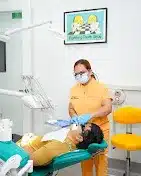
When a child experiences deep tooth decay or dental trauma, our kids’ dentist may recommend root canal treatment. While the term can sound overwhelming to parents, it is a safe and commonly performed procedure in paediatric dentistry.
The approach differs depending on whether the affected tooth is a baby tooth or a permanent tooth. At Dental Nook Brisbane, our focus is always on preserving your child’s natural teeth wherever possible while ensuring comfort and long-term oral health.
Signs Your Child May Need Root Canal Treatment
Children often show subtle signs before a tooth problem becomes obvious. If your child begins favouring one side while chewing or reacts sharply to hot or cold foods, it may indicate infection within the tooth.
As our Brisbane paediatric dentist explains, teeth rarely hurt without a cause. When discomfort persists, infection inside the pulp may be responsible.
Signs to watch for include:
- Persistent toothache: If your child repeatedly complains about the same tooth, especially with throbbing or lingering pain, it requires professional assessment.
- Lingering sensitivity: Pain that continues after exposure to hot chocolate or ice cream may indicate nerve irritation.
- Pain during chewing: Avoiding certain foods or chewing only on one side may suggest pressure on an infected nerve.
- Swelling around the tooth: Puffy gums or facial swelling near a specific tooth can signal infection beneath the surface.
- A small gum “pimple”: A small bubble on the gum near the tooth may indicate an abscess attempting to drain.
- Tooth discolouration: A tooth that appears darker or grey may have a damaged or non-vital nerve.
- Pain disturbing sleep: Night-time tooth pain is a serious sign of inflammation or infection.
If your child is experiencing significant discomfort, contact our Emergency Dentist Brisbane team immediately. Early care helps relieve pain quickly and prevents further complications.
How Do I Know If I Need a Root Canal or Just a Filling?
A dental filling is suitable when decay is confined to the outer layers of the tooth. If decay or bacterial infection reaches the inner dental nerve (pulp), a root canal treatment is required to save the natural tooth.
Our dentists evaluate your tooth using high-resolution digital X-rays and symptom assessments, walking you through all viable treatment options before starting any procedure.
Is Root Canal Treatment Painful?
Modern root canal treatment is generally no more uncomfortable than receiving a standard dental filling. Local anaesthetic completely numbs the tooth, and removing the infected nerve provides immediate relief from severe toothache pain.
Advanced techniques and effective local anaesthetics ensure your procedure is smooth and comfortable. Most patients report significant pain relief right after treatment.
Root Canal Treatment for Baby Teeth
Baby teeth may be temporary, but they serve essential roles in speech development, chewing, and guiding permanent teeth into proper position. For this reason, we aim to preserve them whenever possible.
Depending on how far the infection has progressed, treatment may involve a pulpotomy or a pulpectomy.
Pulpotomy
A pulpotomy is recommended when infection is limited to the crown portion of the tooth and the roots remain healthy.
The procedure involves:
- Removal of decay
- Accessing the pulp chamber
- Removing inflamed tissue from the crown portion
- Placing medicated material to protect healthy root tissue
- Sealing the tooth and restoring it, typically with a stainless-steel or white crown
This treatment removes the infected surface tissue while preserving healthy roots, allowing the baby tooth to remain functional until it naturally exfoliates.
Pulpectomy
If infection has extended into the roots, a pulpectomy may be required.
This involves:
- Removing all infected pulp tissue
- Cleaning and disinfecting the root canals
- Filling the canals with a resorbable material
- Sealing the tooth
- Placing a protective crown
The filling material naturally dissolves when the baby tooth begins to loosen, ensuring proper development of the permanent tooth underneath.
Root Canal Treatment for Permanent Teeth
When decay or trauma affects a permanent tooth, a full root canal procedure may be necessary. Unlike baby teeth, permanent teeth are intended to last a lifetime.
The dentist removes the infected pulp, thoroughly disinfects the canals, and seals the tooth to prevent reinfection. A crown is usually placed to restore strength and function.
If the permanent tooth is still developing, specialised techniques may be used to allow the root to continue forming before final sealing.
Key Differences Between Baby and Permanent Tooth Root Canals
Treatment for baby teeth is designed as a temporary preservation strategy. Resorbable materials are used, and the goal is to maintain space for adult teeth.
Treatment for permanent teeth is intended as a long-term solution. Non-resorbable materials are used to create a lasting seal, and the restoration is built to withstand many years of function.
Both approaches relieve pain and eliminate infection, but the objectives differ based on the tooth’s developmental role.
How We Decide Which Treatment Is Appropriate?
At Dental Nook Brisbane, we assess:
- The depth of decay
- The condition of the pulp
- The presence of swelling or abscess
- The stage of development of the permanent tooth
- The child’s age and comfort level
Our goal is always to choose the least invasive option that effectively resolves infection while protecting future dental development.
Root Canal Aftercare for Children
Following treatment, proper care at home supports smooth healing.
- Wait until numbness wears off before eating to avoid accidental biting.
- Provide soft foods for one to two days.
- Monitor for mild tenderness, which is normal.
- Maintain gentle brushing and flossing.
- Avoid sticky or hard foods that could disturb restorations.
- Administer any prescribed medication exactly as directed.
- Attend scheduled follow-up visits for monitoring.
If swelling or severe pain develops, contact our clinic promptly.
Why Baby and Permanent Teeth Are Treated Differently?
Baby teeth have thinner enamel and roots that are designed to resorb naturally. Treatment must protect the developing permanent tooth beneath.
Permanent teeth require thorough and long-lasting treatment because they are not replaced. Infection control must be complete to prevent long-term complications.
Different structure. Different purpose. Same priority — protecting your child’s oral health.
When to Seek Urgent Dental Care?
Seek immediate attention if your child experiences:
- Facial swelling
- Fever
- Difficulty swallowing
- Pain that wakes them at night
These may indicate spreading infection and require urgent treatment.
Our Emergency Dentist Brisbane service offers after-hours appointments, subject to availability.
Gentle Sedation Options for Anxious Children
For children who feel anxious or have dental phobias, we provide safe sedation options.
Laughing gas helps children relax while remaining awake and responsive.
For complex procedures, Sleep Dentistry Brisbane under general anaesthesia allows children to rest comfortably throughout treatment.
Our approach ensures a calm and supportive environment tailored to each child’s individual needs.
Support for Children With Special Needs
At Dental Nook Brisbane, we understand that every child has a unique experience with dental visits.
Our Brisbane paediatric dentists are experienced in caring for children with autism, sensory sensitivities, developmental differences, and complex medical conditions. Appointments are adjusted to your child’s comfort level, with clear communication and gentle pacing throughout.
We are committed to providing inclusive, compassionate dental care for every family.

Frequently Asked Question
1. Why Would My Child Need a Root Canal?
A child may need a root canal when tooth decay or injury reaches the nerve inside a baby tooth. When the pulp becomes infected or inflamed, we carefully clean the inside of the tooth to remove bacteria and relieve pain, rather than removing the tooth altogether.
Preserving the baby tooth is important. It helps your child chew comfortably, speak clearly, and most importantly, maintain the correct space for the adult tooth developing underneath. Root canal treatment in children is a gentle and targeted procedure designed to resolve infection while supporting healthy dental development.
2. Is a Baby Root Canal the Same as an Adult Root Canal?
Not exactly.
A baby root canal is generally simpler because baby teeth have thinner roots and are naturally meant to fall out at the right time. In many cases, we remove only the infected portion of the pulp while preserving healthy tissue in the roots, allowing the tooth to remain functional until it is ready to exfoliate naturally.
In permanent teeth, the entire pulp is removed, and the canals are thoroughly cleaned and sealed. Since permanent teeth are designed to last a lifetime, treatment is more comprehensive and focused on long-term preservation.
3. What Is the Difference Between a Pulpotomy and a Pulpectomy?
A pulpotomy involves removing only the irritated or infected portion of the pulp located in the crown of the tooth, while leaving the healthy tissue within the roots untouched. This is usually recommended when the infection has not extended deeply into the root canals.
A pulpectomy is required when infection has spread throughout the entire pulp, including the roots. In this case, all infected tissue is removed, and the canals are cleaned, disinfected, and filled.
Both procedures aim to save the tooth and eliminate infection, but a pulpectomy is the more comprehensive treatment of the two.
4. Does a Root Canal on a Baby Tooth Hurt?
During the procedure, we use local anaesthetic to ensure your child remains comfortable. They may feel slight pressure or vibration from the dental instruments, but not pain.
Once the numbness wears off, the treated tooth may feel mildly tender for a day or two. This discomfort is typically manageable with mild pain relief if required. Our team ensures your child is supported before, during, and after treatment.
5. Can Baby Teeth Be Pulled Instead of Having a Root Canal?
In some situations, extraction may be necessary. However, we only recommend removing a baby tooth when it cannot be safely restored.
Baby teeth act as natural space maintainers for the permanent teeth developing underneath. Losing one too early can lead to shifting, crowding, or alignment issues later on. Root canal treatment allows the tooth to stay in place, supporting normal chewing, speech, and development until the adult tooth is ready to erupt.
Whenever possible, preserving the tooth is usually the preferred approach.
6. What If My Child Feels Anxious About Treatment?
At Dental Nook Brisbane, we never rush children who feel nervous. We take time to build trust. Your child may be shown the instruments before we begin, or allowed to feel a gentle air puff or hold a mirror, so there are no surprises.
Once children understand that nothing painful is happening, their body language often relaxes naturally. If additional support is needed, we may recommend laughing gas to help them feel calm while remaining awake. For more complex procedures, general anaesthesia may be discussed to ensure treatment is completed safely and comfortably.
Our priority is always gentle care, clear communication, and helping your child feel secure at every step.
Medical Disclaimer
This information is intended for general educational purposes and does not replace personalised dental advice. If your child experiences pain, swelling, fever, or difficulty swallowing, seek prompt dental care.
Caring Support When You Need It Most
Whether your child requires a root canal, urgent care, or a routine follow-up, our team is here to support your family in a calm and welcoming environment.
We also accept Humm and Supercare to help make treatment manageable.
📍 Westfield Carindale Shopping Centre Level 1, Shop 2068 Opp Woolworth, 1151 Creek Rd, Carindale QLD 4152, Australia
📞 07 3124 0248
After-hours emergency appointments are available, subject to availability.