
Experiencing some bleeding after a tooth extraction is completely normal, particularly within the first 24 hours following the procedure. Mild oozing during this period is part of the natural healing process. However, bleeding that does not gradually reduce or stop may indicate a dental emergency. If the bleeding is excessive, continues to soak through the gauze, or persists even after applying firm pressure for an adequate amount of time, it is important to seek professional care without delay. In such situations, contacting an emergency dentist in Brisbane promptly can help prevent further complications and ensure your recovery stays on track. For details about the clinicians at Dental Nook Carindale, see our local dental team.
When a tooth is extracted, your body immediately begins its natural healing response. Blood flows into the empty socket and forms a clot. This clot acts as a protective layer, sealing the area, shielding the underlying bone and nerve endings, and allowing the gum tissue to begin repairing itself. At the same time, the small blood vessels in the area tighten, and platelets work together to stabilise the clot and control bleeding.
In the early stages, it is normal for the site to feel tender. The gum tissue has been disturbed, and the bone beneath has been newly exposed. This temporary sensitivity is expected and usually settles as the clot remains in place and healing progresses.
However, bleeding can become heavier or more difficult to control if the clot becomes dislodged or breaks down too early. When this happens, the body must restart the clotting process, which can make the bleeding seem more noticeable.
During the first few hours following an extraction, a small amount of bleeding is completely normal. You may notice blood on the gauze or a gentle ooze rather than a continuous flow. This is part of the body’s natural clot formation process. As long as steady pressure is applied and time passes, the bleeding should gradually reduce.
Many patients become concerned when they notice pink saliva after a tooth removal. In most cases, this is simply saliva mixed with a small amount of blood. Because saliva spreads easily throughout the mouth, it can appear more dramatic than it actually is.
Active bleeding is different. It typically appears bright red and continues to pool or drip. If you are only noticing a pink tinge when spitting, this is generally considered normal in the early hours after treatment.
After a tooth is removed, an open area remains in the gum and bone. Blood naturally flows to this site to protect it and begin the healing process. This is the same biological response that occurs when you cut your skin. The mouth can seem messier because saliva distributes the blood, but seeing some bleeding does not mean there is a problem.
Within the first 24 hours, the bleeding should gradually slow and stop. The clot strengthens and stabilises, and the gum tissue begins to settle. You may still notice a mild metallic taste or occasional pink saliva, especially when talking or moving around. This is common. By the end of the first day, most patients find the area feels calmer and that active bleeding has largely resolved.
For most adults, bleeding is most noticeable during the first one to two hours after the procedure. With firm, consistent pressure, it should gradually reduce. By the end of the day, it usually becomes light oozing or stops altogether. A faint taste of blood or pink saliva may come and go overnight, which is normal. By the following day, there should be no ongoing active bleeding.
Children and teenagers often heal slightly faster. Their gum tissue tends to form a stable clot more quickly. Mild oozing can still occur on the day of the extraction, particularly if they are talking frequently or moving around. By the next morning, bleeding should be minimal or completely resolved. Continued active bleeding beyond this point should be assessed.
Bleeding slowing down does not mean it stops immediately. It means the steady flow reduces to small spots on the gauze or lightly pink saliva. It is common for parents to expect the area to appear completely dry straight away, but healing does not happen that way. The key signs of normal healing are that pressure helps and that bleeding becomes less over time.
Normal post-extraction bleeding may stain the gauze, but it should not repeatedly soak through it. You might notice blood when spitting, but your mouth should not continue filling with blood. If gauze needs to be changed every few minutes because it is heavily saturated, this is no longer typical and should be reviewed by a dental professional.
After a tooth extraction, biting firmly on gauze for 20 to 30 minutes should help a blood clot form and slow the bleeding. If this does not happen, and the bleeding continues despite steady pressure, this is not considered normal healing. Pressure is designed to support clot formation. When it makes little or no difference, it may indicate that the extraction site is not sealing properly. At this stage, home care measures are no longer sufficient, and professional assessment is recommended.
A small amount of blood on gauze is expected after an extraction. However, repeatedly removing gauze that is fully soaked is not. If you find yourself changing gauze multiple times and your mouth continues to fill with blood, this suggests active bleeding. Many patients describe it as bleeding that “just will not stop.” Persistent bleeding of this nature requires prompt dental attention.
In some cases, bleeding may appear to settle initially and then return several hours or even days later. When fresh red blood reappears rather than light pink saliva, this may indicate that the blood clot has been disturbed or broken down. A restarted bleed of this kind should not be ignored and needs to be assessed promptly to prevent further complications.
Bleeding after an extraction should not cause you to feel physically unwell. Symptoms such as light-headedness, weakness, shakiness, or nausea may suggest significant blood loss or stress on the body. These signs should never be dismissed or managed by simply waiting for them to pass. Immediate evaluation is important to ensure your safety.
Certain symptoms indicate that urgent care is necessary. These include bleeding that does not slow, blood pooling in the mouth, repeatedly soaked gauze, increasing pain, or feeling faint. Many patients have a sense that something is not right, whether for themselves or for their child. Trusting that instinct is important. When these warning signs appear, seeking care from an emergency dentist in Brisbane is the safest course of action.
Significant bleeding rarely resolves on its own once it reaches this level. During the night, blood clots can continue to break down, and swelling may increase. By the following morning, the bleeding can become more difficult to control. Seeking treatment early is typically simpler, safer, and more comfortable than waiting and hoping the issue settles naturally.
When a patient presents with ongoing bleeding after a tooth extraction, immediate steps are taken to stabilise the area. The extraction site is carefully examined to identify the cause, which may include a dislodged clot, tissue trauma, or an underlying medical factor affecting healing.
The area is gently cleaned and managed to re-establish clot formation. This may involve applying firm local pressure, using clot-promoting materials, or placing sutures to secure the gum tissue and protect the socket. In some cases, medicated dressings are used to effectively control bleeding. The patient is monitored closely until the site is stable and safe to manage at home.
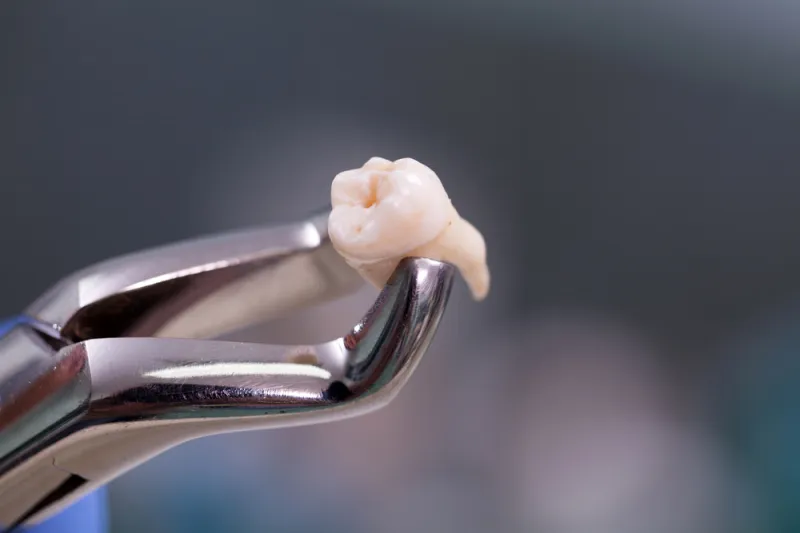
After a tooth extraction, light oozing can be normal. However, bright red bleeding that continues steadily is not part of typical healing. It may indicate that the blood clot has shifted or has not formed securely.
Patients often notice that biting on gauze no longer reduces the bleeding the way it did earlier. The blood appears fresh rather than diluted with saliva, and it does not gradually settle. When this happens, it is important to have the area assessed rather than waiting for it to resolve on its own.
A healthy extraction site usually appears dark and covered during early healing. If the socket looks pale, hollow, or visibly open, it may mean the protective clot is missing or breaking down.
Without this protective layer, the underlying bone and tissue are exposed. This can slow healing and may allow bleeding to begin again. If the area appears empty rather than covered, it is best to contact your dentist for guidance.
Mild discomfort is expected in the first few days after an extraction. Healing pain should gradually improve, not worsen.
If you notice increasing pain after several days, particularly a deep, throbbing ache that does not respond to rest or prescribed pain relief, this may suggest the clot has been disturbed. When the bone beneath the socket becomes exposed, discomfort can intensify. Pain that progresses rather than improves should always be reviewed.
A persistent metallic taste may indicate that small amounts of blood are mixing with saliva. Some patients notice they are swallowing more frequently without realising why.
It is important to note that a mild metallic taste shortly after extraction can be normal and often reflects minor blood in the saliva. However, if the taste continues hours later or feels persistent, it may suggest slow ongoing bleeding from a weakened clot. While this sign alone does not confirm a disturbed clot, it should not be ignored if combined with other symptoms.
Place clean gauze directly over the extraction site and bite down firmly for a full 20 to 30 minutes. Avoid lifting the gauze to check too soon. Each time the gauze is removed prematurely, the clot that is trying to form can be disrupted.
Sit upright and keep your head elevated. Lying flat increases blood flow to the mouth and may worsen bleeding. Staying still allows the clotting process to stabilise.
If the gauze is lightly stained, it does not need to be replaced. Change it only when it becomes fully soaked. Each replacement restarts the clotting process, so limiting changes supports better healing.
Even if your mouth feels uncomfortable, do not rinse or spit. These actions create suction within the mouth, which can dislodge the clot before it has secured itself.
Try not to talk excessively, move the area repeatedly, or examine the socket in the mirror. Touching it with your tongue or checking it frequently may interfere with healing. The less disturbance, the better the recovery.
Applying a cold pack to the outside of the cheek in short intervals can help reduce swelling and may slow bleeding. This should always be done externally, not inside the mouth.
Any activity that creates suction inside the mouth can disturb the clot. Smoking and vaping also delay healing due to heat and chemical irritation. Even a single attempt can restart bleeding that had begun to settle.
Bleeding should gradually reduce with steady pressure and rest. If it does not improve after proper pressure has been applied, it is important to seek professional dental care rather than repeatedly attempting home measures.
Swishing or spitting creates negative pressure in the mouth. Even if bleeding had begun to slow, this suction can loosen the clot before it has stabilised.
Using a straw generates strong suction. Many patients use one without thinking, especially when trying to avoid discomfort. That single action can dislodge the clot and restart bleeding.
The heat and chemicals from smoke irritate the wound and delay healing. The sucking motion further disrupts clot stability. Bleeding may return shortly afterwards, even if the site had appeared stable.
Frequent movement of the mouth or pulling the lip back to inspect the socket keeps disturbing the healing tissue. While it is natural to be curious, repeated checking delays recovery.
Bending, lifting, or exercising increases blood pressure and circulation. This can cause bleeding to restart, sometimes hours after it had initially stopped.
It is common for the tongue to move toward a sore area without conscious thought. That repeated pressure can gradually weaken the clot and interfere with healing.
Heat widens blood vessels. Warm tea, coffee, or soup may increase blood flow to the area, particularly during the first 24 hours, and may cause bleeding to pick up again.
Feeling comfortable does not mean the socket has fully stabilised. The clot remains delicate in the early stages. Returning to a busy routine too soon can unintentionally disrupt the healing process your body is working to complete.
After your extraction, you will be asked to bite firmly on gauze. It is important to follow these instructions exactly and allow enough time for the gauze to work properly. The first hour plays a critical role in stabilising the blood clot and supporting early healing. Interrupting this process too soon can increase the likelihood of further bleeding later.
Remain upright while sitting and use extra support under your head when lying down. Elevation helps limit blood flow to the surgical area and assists the clot in remaining secure. Keeping your head raised, especially during the first day, can make a noticeable difference in controlling bleeding.
Try to minimise talking, avoid wide mouth movements, and do not disturb the extraction site. Giving the area time to settle allows the clot to form properly and reduces the risk of irritation or dislodgement.
Stick to soft foods that require little or no chewing. Foods that are cool in temperature are generally more comfortable during the initial healing phase. Avoid hot, spicy, crunchy, or hard foods on the first day, as these can irritate the area and potentially trigger renewed bleeding.
Do not use straws, and avoid smoking or vaping. Suction movements can disturb the developing clot, while smoking and vaping interfere with healing and increase the risk of complications, including bleeding.
Even if you feel fine after your appointment, it is important to rest. Physical activity can raise blood pressure and may disrupt the early stages of healing. Taking it easy for the remainder of the day supports proper recovery.
Placing a cold pack gently against the cheek near the extraction site in short intervals can help reduce swelling and assist in controlling minor bleeding. Ensure the cold pack is applied externally and not inside the mouth.
Only take medications that have been prescribed or recommended by your dentist. Some medications, if taken incorrectly, can affect bleeding. Always follow dosage instructions carefully to support safe healing.
Dental anxiety can cause physical reactions such as panic, nausea, trembling, or difficulty remaining still during treatment. For some patients, anxiety becomes a significant barrier to receiving necessary dental care. At Dental Nook, we offer sedation dentistry options to help patients feel more comfortable and supported.
The most suitable sedation method depends on the level of anxiety, the type of procedure being performed, your medical history, and other individual considerations.
Laughing gas, also known as nitrous oxide, is a mild sedation option administered through a small mask placed over the nose during treatment. It promotes relaxation and reduces feelings of fear while allowing you to remain awake and aware.
The effects wear off quickly once the gas is discontinued, and most patients can leave the clinic independently and return to their normal routine. This option is well-suited for patients with mild to moderate anxiety or those who prefer a lighter form of sedation that maintains awareness and control.
IV sedation is delivered through a vein in the arm and provides a deeper level of relaxation compared to laughing gas. Often referred to as twilight sedation, it slows your thoughts, relaxes your body, and may result in limited memory of the procedure.
Although you continue to breathe independently, you will feel drowsy and less aware of what is happening around you. Because the sedative effects can continue after your appointment, you will need a responsible adult to drive you home. This option is commonly recommended for patients with significant dental anxiety or those who find it difficult to cope during treatment.
Sleep dentistry involves the use of general anaesthesia to place you in a fully unconscious state for the entire procedure. You will not be aware of the treatment and will not experience sensation during the procedure.
This approach is typically considered for patients with severe dental anxiety, complex treatment needs, or those who are unable to tolerate dental care through other methods. General anaesthesia is delivered in a controlled medical environment, and you will require a responsible adult to accompany you home and remain with you afterwards.

When your child has sensory sensitivities, developmental differences, or requires additional support, visiting the dentist can sometimes feel uncertain or overwhelming. We understand that every child experiences dental care differently, which is why our approach is thoughtful, flexible, and tailored to individual needs.
For children who may require a gentler pace, reduced noise and stimulation, or clear step-by-step explanations in simple language, our team adjusts the environment and appointment structure accordingly. We allow extra time for your child to feel comfortable, settled, and supported before beginning any treatment.
At Dental Nook, our doctors have extensive experience providing dental care for children with additional needs. Their approach is centred on patience, understanding, and adaptability. Each appointment is carefully adjusted to suit your child’s comfort level, communication style, and ability to cope on the day. Our goal is to create a calm, safe space where children feel respected and supported throughout their visit.
Light oozing overnight can be completely normal after a tooth extraction. When you lie down to sleep, blood flow to the mouth increases, and saliva may mix with small traces of blood. The key point is that the bleeding settles with gentle pressure and does not continue as active bleeding.
If you wake up with a mouth full of bright red blood that continues to flow or does not slow down, this is no longer considered normal and should be assessed by your dentist.
No. The blood clot plays an important role in healing and should not be removed. It protects the bone and nerves underneath while allowing the area to recover properly.
Picking at the clot, rinsing vigorously, or attempting to clean deeply around the site can disturb it, restart bleeding, and increase discomfort. If the clot appears unusual or you feel concerned, it is always safer to have it reviewed rather than trying to manage it yourself.
Pain and bleeding do not always occur together after a tooth extraction. You may experience soreness as the gum and bone heal, even if there is no visible bleeding.
Conversely, mild bleeding can occur with very little discomfort, particularly in the early stages. What matters most is how symptoms progress over time, rather than whether pain and bleeding appear at the same time.
If the clot becomes dislodged without you noticing, healing can still occur, but there is a higher risk of developing a condition known as dry socket. This happens when the protective clot is lost and the underlying bone or nerves become exposed.
Dry socket typically causes increasing pain, an unpleasant taste or odour, and delayed healing. It often develops a few days after the extraction. If you notice bright red bleeding, worsening pain instead of gradual improvement, or food collecting in the socket, it may indicate the clot has been disturbed.
In this situation, contact your dentist. The area can be examined and, if necessary, treated with a protective dressing or appropriate care to reduce discomfort and support healing.
Infection can contribute to bleeding after a tooth extraction, although it is not the most common early cause and is usually accompanied by additional symptoms.
Around 7 to 10 days after the procedure, bacteria entering the extraction site or breakdown of the clot can lead to inflammation or infection. This may affect small blood vessels and result in secondary bleeding.
When infection is present, you are more likely to notice increasing pain, swelling, discharge, or an unpleasant taste or smell, rather than bleeding alone. Infections require professional dental assessment, as they can delay healing and need targeted treatment.
In most cases, gauze should remain in place for approximately 30 to 60 minutes following the extraction to help a stable clot form and control bleeding. Bite firmly yet gently on the damp gauze during this time without frequently checking the site.
After this period, you can assess whether bleeding has reduced. If it continues, replace the gauze with a clean piece and apply steady pressure in 30 to 45 minute intervals until the bleeding becomes minimal or stops. For many patients, this process settles within a few hours on the day of the extraction.
Once the gauze shows little to no blood and bleeding has significantly reduced, it is usually safe to stop using it. Mild oozing or pink saliva may still occur for up to 24 hours.
Yes, it can be normal for bleeding to come and go in the first one to two days after a tooth extraction. During this time, your body is working to stabilise the clot and protect the healing site.
Mild oozing or small amounts of blood in saliva may appear again after talking, eating, or changing position, even if it seemed to have settled earlier. This can continue for up to 24 hours or slightly longer.
What is important is that the bleeding remains light and responds to simple pressure. If it becomes heavy, persistent, or does not reduce over time, it should be checked by your dentist.
If new bleeding begins several days after the extraction, it is not considered typical and should be reviewed. After the first 24 to 48 hours, the clot should be firm, and the site should be settling.
Late bleeding may indicate that the clot has broken down, food or debris has irritated the area, or an infection is developing. You may also notice discomfort that feels different from the earlier healing phase or an unpleasant taste accompanying the bleeding.
In this case, contacting your dentist is recommended so the underlying cause can be properly assessed and managed.
The information provided is intended for general educational purposes only and does not replace personalised advice from your dentist or medical professional. Every child’s situation is unique, and symptoms may change quickly. If you notice bleeding that feels heavy, concerning, or unusual, please seek prompt dental or medical care.