When you are told a tooth is severely infected or damaged, it can feel overwhelming. Many patients in Brisbane ask the same question:
Should I save the tooth with a root canal, or remove it and replace it with an implant?
At Dental Nook, Dr Nikita believes in helping you make a calm, informed decision. The right option depends on your individual case, long-term goals, and overall oral health.
Root Canal vs Extraction and Implant: Which One Is Right for You?
There is no universal answer. Every tooth and every patient is different.
In most situations, if a tooth can be predictably saved, preserving your natural tooth is often the preferred approach. However, if the tooth is too damaged to restore properly, extraction followed by a dental implant may be the better long-term solution.
Let’s understand both options clearly.
What Is a Root Canal?
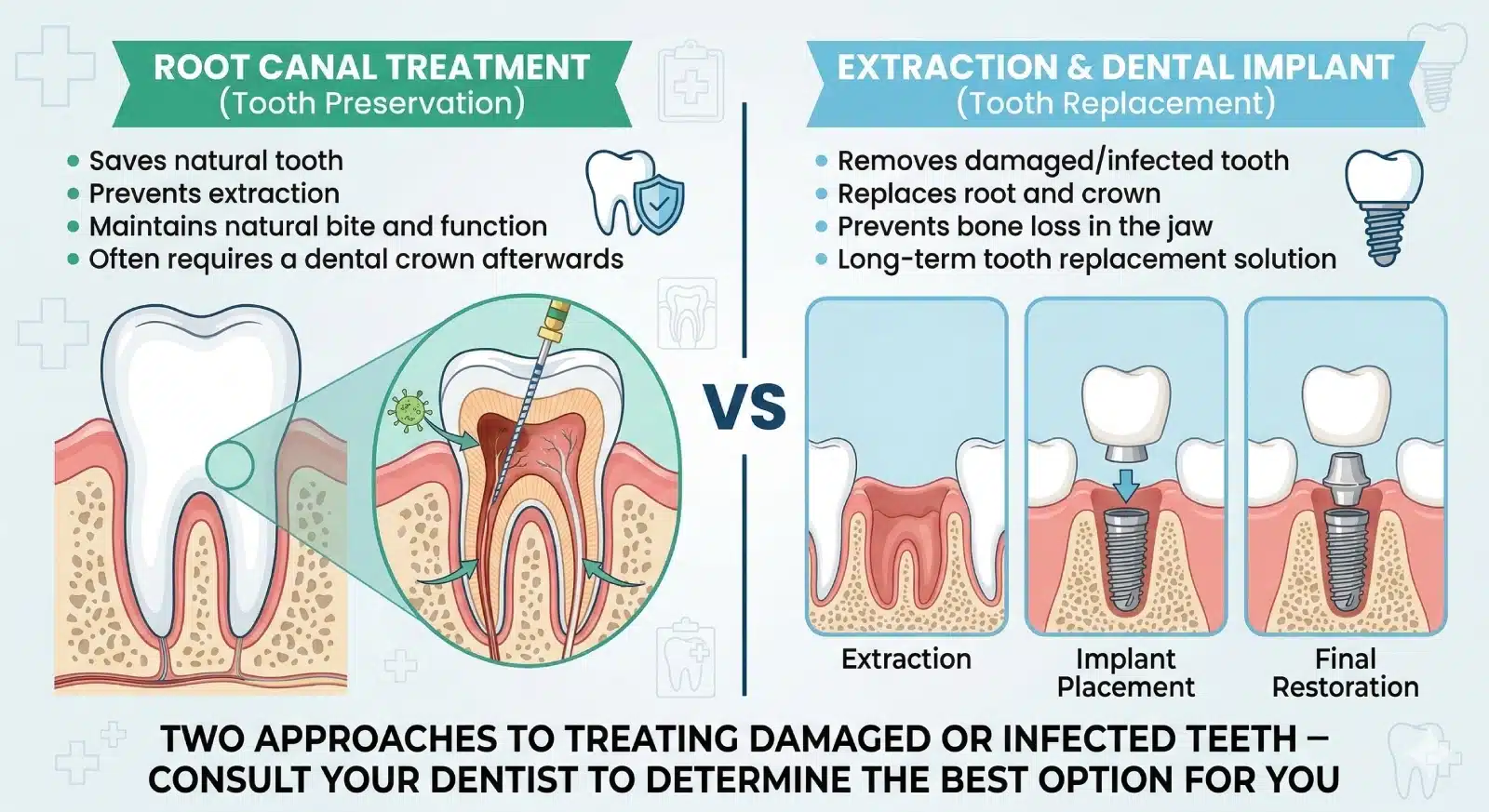
A root canal is a treatment used to remove infection from inside a tooth.
When bacteria reach the pulp (the inner nerve tissue), it can cause pain, swelling, and sensitivity. During the procedure:
- The infected pulp is removed
- The canals are cleaned and disinfected
- The tooth is sealed
- A crown is usually placed to protect and strengthen it
Root canal treatment allows you to keep your natural tooth while eliminating infection.
10 Common Situations Where a Root Canal Is Recommended
Severe Tooth Pain
Persistent pain, especially when chewing, may indicate pulp infection.
Lingering Sensitivity
Sensitivity to hot or cold that does not settle quickly can signal nerve involvement.
Swelling or Gum Tenderness
Localised swelling near a specific tooth may mean infection is present.
Abscess Formation
A dental abscess is a serious infection that often requires root canal treatment.
Deep Decay
When cavities extend into the pulp, saving the tooth requires internal cleaning.
Cracked or Fractured Teeth
If the crack reaches the nerve but the structure is restorable, a root canal may help.
Trauma to the Tooth
Impact injuries can damage the pulp even if the tooth looks intact externally.
Discolouration
A darkened tooth can sometimes indicate nerve damage.
Recurrent Infection Under a Crown
Existing crowns can sometimes hide deep decay underneath.
Radiographic Signs of Infection
Digital imaging may show infection even before severe symptoms appear.
At Dental Nook, careful diagnosis ensures treatment is only recommended when necessary.
Keys to a Successful Root Canal
Accurate diagnosis and precise cleaning are critical. Digital imaging helps assess the extent of infection. After cleaning, the tooth must be sealed properly to prevent reinfection.
In most cases, placing a crown after a root canal significantly improves the long-term strength of the treated tooth.
Modern root canal therapy is far more comfortable than many patients expect.
Preparing for a Root Canal
Local anaesthetic ensures you remain comfortable throughout the procedure. Most patients describe the experience as similar to having a filling.
You may experience mild tenderness for a few days afterwards, which typically resolves quickly.
Early treatment often prevents more complex procedures later.
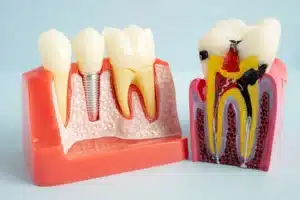
What Is a Dental Implant?
A dental implant replaces a missing tooth.
It involves placing a titanium post into the jawbone, which acts as an artificial root. After healing, a custom crown is attached to restore function and appearance.
Dental implants are designed to look and feel like natural teeth.
Signs That You May Need a Dental Implant
- The tooth is severely fractured below the gum line
- There is insufficient healthy tooth structure remaining
- Repeated root canal treatments have failed
- The tooth has already been extracted
- The infection is too extensive to restore predictably
In these cases, extraction and implant placement may offer better long-term stability.
Making the Decision: Root Canal or Implant?
Saving Your Natural Tooth
Natural teeth help maintain bone structure and normal chewing function. If a tooth can be saved safely, it is often beneficial to do so.
Long-Term Success Rates
Both root canal treatment and dental implants have high success rates when properly planned and maintained.
Cost Considerations
A root canal and crown are often more cost-effective than extraction followed by implant placement. Implants typically involve multiple stages and healing time.
Treatment Timeline
Root canal treatment can often be completed in one to two visits. Implants require surgical placement and a healing period before final restoration.
Overall Oral Health
The condition of your bone, gums, and neighbouring teeth plays a key role in determining the most appropriate option.
Root Canal vs Crown vs Extraction vs Implant
It is important to understand how these treatments differ:
- A root canal removes infection inside the tooth
- A crown protects and strengthens a treated tooth
- An extraction removes the tooth entirely
- An implant replaces a missing tooth after extraction
Sometimes, treatments are combined. For example, a root canal is often followed by a crown.
Afraid of Dental Procedures? Pure Dentistry Has a Solution
If anxiety is part of your concern, you are not alone. Dental Nook offers gentle treatment options designed to keep you comfortable.
Sedation options may include:
Oral Sedation
Medication taken before treatment to help you feel relaxed.
IV Sedation
Administered by trained professionals for deeper relaxation during more complex procedures.
Your comfort and safety are always prioritised.
Still Unsure? Let Us Help You Make the Right Choice
Choosing between root canal treatment and extraction with implant placement requires careful evaluation.
At Dental Nook in Brisbane, Dr Nikita will:
- Assess the condition of your tooth
- Explain all available options clearly
- Discuss costs and timelines
- Recommend the most predictable long-term solution
Early diagnosis often means simpler treatment and better outcomes.
If you are experiencing tooth pain or have been advised to consider root canal or extraction, book a consultation with Dental Nook. We will guide you through your options with clarity, honesty, and care.