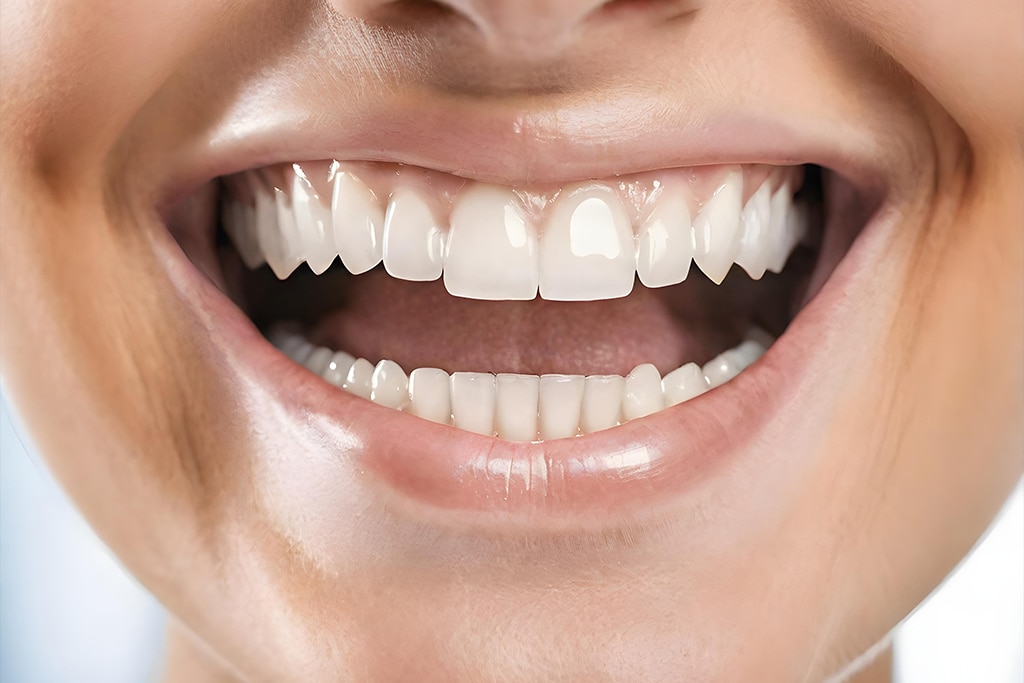
Dental Crowns in Brisbane

Experts in Dental Crowns in Brisbane

Our Dental Crown Clinic is in Carindale near Carina, Eight Mile Plains, Mansfield, Mount Gravatt, Camp Hill, Belmont

A damaged or heavily filled tooth does not always need to be removed. In many cases, a custom dental crown can strengthen the tooth, restore function and improve the appearance of your smile.
At Dental Nook Carindale, we provide high-quality, natural-looking dental crowns for patients across Brisbane, combining modern materials with gentle, patient-centred care.

Dental Crowns in Brisbane

Our Dental Nook Carindale clinic provides high-quality dental crowns for patients from nearby suburbs including Carindale, Wishart, Eight Mile Plains, Mansfield, Holland Park and Rochedale.

A single custom-made crown can range from around $800 to $2,000 per tooth, depending on the material chosen and the complexity of the case. At Dental Nook, we focus on providing carefully crafted crowns that are designed to look natural, feel comfortable and last for many years.

A dental crown is a strong, tooth-shaped cover that fits over an existing tooth. It is used when a tooth is badly broken, heavily filled or weakened and needs extra protection. The crown caps the remaining tooth structure, restores its normal shape, size and appearance, and helps improve how the tooth functions when you bite and chew. In many cases, placing a crown can save a damaged tooth and keep your smile looking healthy and complete.

4 Signs You May Need A Dental Crown

A dental crown can restore strength, shape, and appearance to a damaged tooth. You may be a good candidate for a crown if any of the situations below sound familiar.

You have had a root canal

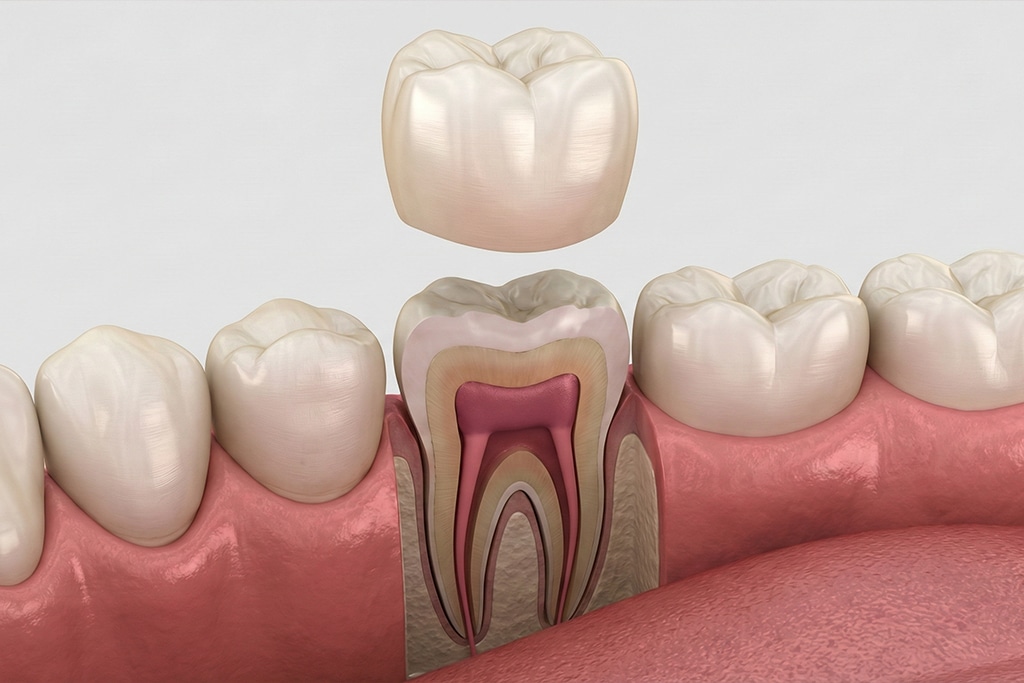
Root canal treatment clears infection from inside the tooth and helps save your natural tooth. During the procedure, the dentist removes the infected nerve and decayed tissue from the centre of the tooth.

After a root canal, the remaining tooth structure can be weaker and more likely to chip or fracture. Placing a crown over the tooth helps protect it, restore its shape, and reduce the risk of further damage.

You have a large or advanced cavity

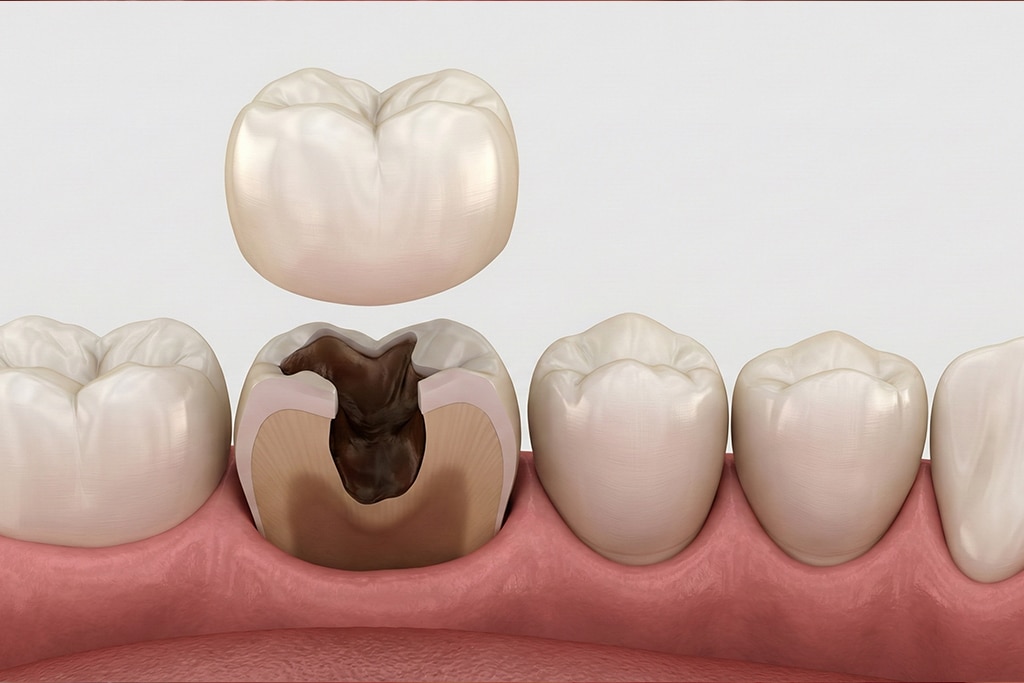
Small cavities are often treated with a simple filling. When decay is extensive, however, the remaining tooth may not be strong enough to hold a filling on its own.
In these cases, a dental crown is usually the more reliable option. The crown covers and seals the weakened tooth, giving it better long-term protection. It is important to remember that a crown does not replace healthy gums, so good brushing, flossing, and regular check-ups are still essential.
dental crowns for advanced cavity

You have misshapen or heavily stained teeth

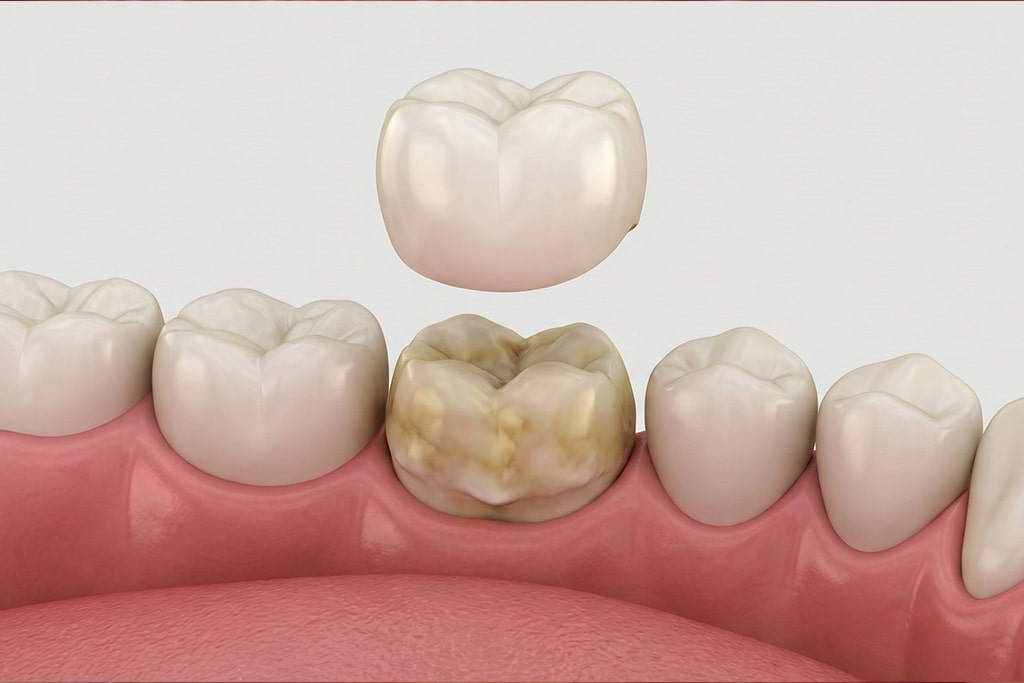
Teeth that are misshapen, badly discoloured, or worn can make people feel self-conscious about their smile.

A crown can mask these cosmetic concerns by completely covering the visible part of the tooth. This improves the look of your smile and also supports and strengthens the underlying tooth structure.

You have a broken or fractured tooth

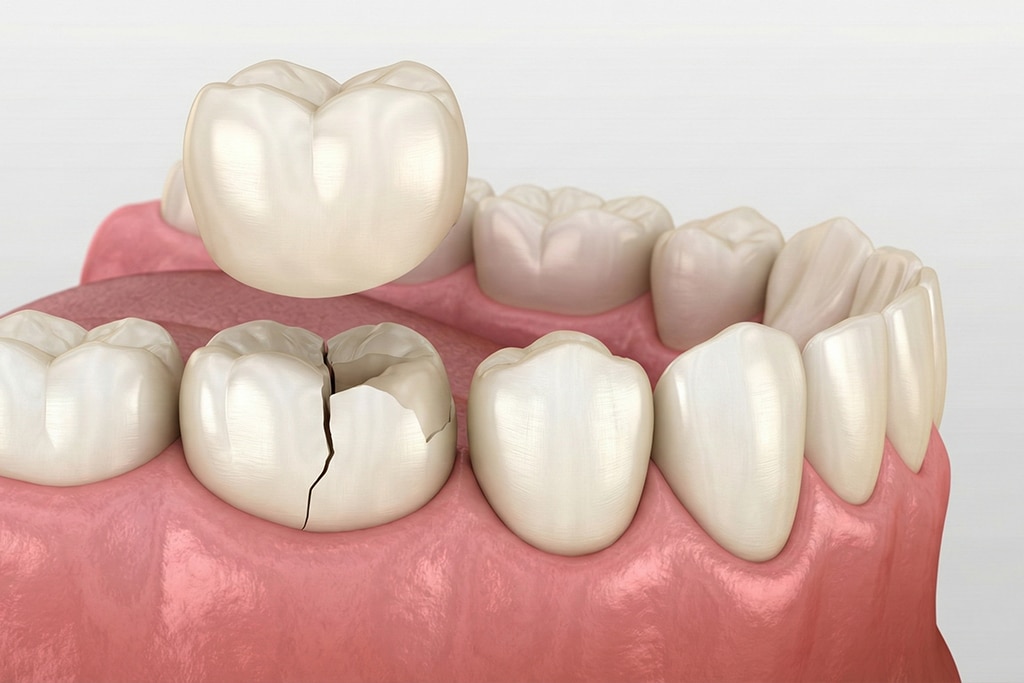
A tooth that has cracked or broken after an injury or biting something hard often needs more than a filling.
A crown can hold the damaged tooth together, support the remaining structure, and help relieve discomfort when chewing. By protecting the tooth from further fracture, a crown can often prevent the need for extraction in the future.
If any of these signs apply to you, the team at Dental Nook can assess your tooth and discuss whether a crown is the right option for restoring your smile.
dental crown for broken teeth

How Dental Crowns Can Help

Dental crowns are used to:
  • Protect a weakened tooth from cracking
  • Hold together the pieces of a fractured tooth
  • Restore a broken or very worn tooth
  • Replace an old or heavily filled tooth
  • Secure a dental bridge in position
  • Improve the shape of an irregular tooth
  • Cover a badly stained or discoloured tooth

What Is a Dental Crown?

A dental crown is a custom-made, tooth-shaped cover that fits over a damaged tooth. It is used when a simple filling is no longer enough to restore strength, function, or appearance.
Crowns are often recommended when:
  • A tooth has been weakened by extensive decay
  • The surface of a tooth is starting to crumble
  • There is a high risk that the tooth cusp may fracture
  • Extra support is needed for a dental bridge
  • A dental implant needs a natural-looking top tooth
  • A tooth is severely discoloured and needs cosmetic improvement

How a Crown Supports the Tooth?

Once fitted, the crown surrounds the visible part of the tooth. This restores the tooth to a normal shape and size and reinforces the remaining structure. A crown also protects large fillings from breaking and helps the tooth cope with everyday biting and chewing.

Fitting Your Crown

When placing a crown, the dentist carefully shapes the tooth so the crown sits snugly on the tooth, not on the gum. A precise fit is important to avoid irritation, make cleaning easier, and keep your gums healthy.

Crowns for Teeth With Large Fillings

If a tooth already has a large filling or has lost a lot of structure because of decay, it may no longer be strong enough to support another filling. In these situations, a crown can stabilise the tooth and reduce the risk of it fracturing.
At Dental Nook Brisbane, our dentists provide high-quality crowns for patients across Brisbane’s southside, helping restore comfort, function, and confidence in their smile. If you are unsure whether you need a crown, our team can examine your tooth and talk you through the best treatment options for long-term protection.

Do you have an unexplained toothache?

Sometimes a tooth can ache even though there is no obvious hole or break you can see or feel. This can be caused by tiny hairline cracks in old fillings, especially on the biting surfaces. These cracks may irritate the tooth and create a deep, hard-to-locate pain. In many cases, placing a dental crown (a protective cap) over the tooth helps seal and support it, bringing the tooth back to comfortable function again.

How long does it take to fit a crown?

At Dental Nook Brisbane, most dental crowns are completed over two or more appointments.
  • At the first visit, your dentist removes any decay, shapes the tooth, and prepares it for the new crown.
  • At the second visit, your custom crown is fitted and bonded securely in place.

Preparing Your Tooth for a Dental Crown

Patients having a crown usually need two clinical visits to get ready for the final restoration. Depending on your case, your crown may be designed and made chairside or fabricated in a dental laboratory.

Dental Crown – First Appointment

At your initial visit, the dentist performs a full examination of the tooth, often using X-rays to assess the tooth and surrounding bone. If there are signs of decay, infection, or damage to the nerve, you may first need a root canal treatment.
The tooth is then reshaped across the top and sides to make enough room for the crown material. How much is removed depends on the type of crown being made.
Once the tooth is prepared, an impression or digital scan is taken so the crown can be crafted to match your bite. A temporary crown is placed over the tooth to protect it while your permanent crown is being made.

Dental Crown – Second Appointment

At the second visit, the permanent crown is ready to be fitted. The dentist removes the temporary crown, then carefully checks the fit, bite, and colour of your new crown. If everything looks and feels right, the crown is cemented onto your tooth under local anaesthetic so the procedure is comfortable.Once fitted, the crown surrounds the visible part of the tooth. This restores the tooth to a normal shape and size and reinforces the remaining structure. A crown also protects large fillings from breaking and helps the tooth cope with everyday biting and chewing.
A crown is an excellent option for a heavily damaged tooth. It can restore strength, function, and appearance while relieving ongoing discomfort.

Fitting Your Crown

When placing a crown, the dentist carefully shapes the tooth so the crown sits snugly on the tooth, not on the gum. A precise fit is important to avoid irritation, make cleaning easier, and keep your gums healthy.

When Do We Recommend a Dental Crown?

Your dentist may suggest a crown when:
  • A tooth is broken or cracked
  • Fractured pieces of a tooth need to be held together
  • A dental bridge needs support
  • A dental implant requires a natural-looking top tooth
  • A tooth is badly stained or discoloured
  • A tooth has a weakened structure and needs extra protection
At Dental Nook Brisbane, once the crown is bonded in place, it fully covers the visible part of the tooth, helping to protect it and restore your smile for the long term.

What materials and types are available for a dental crown?

Dental crowns can be made from several different materials. Broadly, they fall into three main groups:
all-ceramic, all-metal, and porcelain fused to metal.
At Dental Nook Carindale, we usually recommend tooth-coloured crowns that blend naturally with your smile. High-quality porcelain is often preferred for cosmetic cases, but it is not the only option available. Depending on your tooth, bite, and budget, your dentist may suggest alternatives such as acrylic resin, zirconia, gold, or combinations of materials.

Common dental crown options

All-resin crowns

All-resin crowns are one of the most affordable options. They are made from acrylic-based materials (such as polymethyl methacrylate) and can look very natural, but they are more prone to wear and fracture than other types, so they are usually chosen for short- to medium-term solutions.

Zirconia crowns

Zirconia crowns are highly durable and resistant to cracking or chipping. They also have a very lifelike appearance, making them a popular choice for patients who want both strength and aesthetics. Because of these advantages, zirconia crowns generally sit at the higher end of the price range.

Gold crowns

Gold crowns have been used in dentistry for many years and perform extremely well under chewing forces. They are long-lasting and gentle on opposing teeth. However, they do not match the natural tooth colour, so they are usually placed on back teeth where appearance is less of a concern.

Metal crowns

Metal crowns are made from strong alloys such as gold alloys or other base metal alloys. They offer excellent longevity and are very resistant to fracture, but their metallic colour makes them more suitable for molars that are less visible when you smile.

Porcelain-fused-to-metal (PFM) crowns

PFM crowns have a metal base covered with tooth-coloured porcelain. This design combines strength with a natural shade that can be closely matched to your surrounding teeth. Over time, the porcelain surface can wear more than solid metal options, but PFMs remain a reliable, widely used choice for many patients.

All-porcelain or all-ceramic crowns

All-ceramic crowns contain no metal and provide some of the most natural-looking results, especially for front teeth. They are ideal when aesthetics are the top priority. While they are strong, they may be slightly less robust than metal-based crowns in areas of heavy biting force.
If you are considering a tooth-coloured crown, it can be worth discussing teeth whitening before final shade selection. Whitening first allows your dentist to match your crown to your brighter smile.

Dental crowns for front teeth

When front teeth are heavily filled, chipped, or discoloured, patients often worry about how a restoration will look. A carefully designed porcelain or ceramic crown can restore strength while recreating a natural, even smile line. At Dental Nook, we focus on shape, shade, and translucency so your crowned front tooth blends smoothly with neighbouring teeth.

Dental crowns for sensitive teeth

If you are living with severe tooth sensitivity – for example, in and around suburbs such as Carindale, Carina, Mansfield, or Wishart – a crown may be recommended to protect the tooth. By covering and sealing the weakened enamel, a crown can reduce sensitivity and help you eat and drink comfortably again, restoring both function and day-to-day comfort.

Dental Crowns and Teeth Whitening

Thinking about a dental crown at Dental Nook for a cosmetic upgrade It is usually best to complete teeth whitening before we match the colour of your new crown. At Dental Nook, we use high-quality crowns that resist staining and bleaching. If your teeth are still yellow or dark, the crown will be made to blend with that darker shade. By whitening first, your crown can be matched to a brighter, healthier tooth colour for a more even and confident smile.

Cosmetic Reasons for Choosing a Dental Crown

  • improve the shape of a tooth that is worn, misshapen or uneven
  • cover a tooth that is permanently stained or discoloured
  • create a more even, balanced smile line
A well-designed crown can blend seamlessly with your other teeth and transform the way your smile looks.

Dental Crowns at Dental Nook Brisbane

Dental Nook provides custom crowns and bridges for patients from Carindale, Carina, Camp Hill, Mansfield, Mount Gravatt and the wider Brisbane Southside. Our crown treatments can restore teeth that have been chipped, fractured, damaged in an accident or weakened by decay or infection.A tooth that has cracked or broken after an injury or biting something hard often needs more than a filling.
Our Carindale clinic is easy to reach, with convenient parking and a relaxed setting, so you spend less time dealing with traffic and more time focusing on your health and family.
If you would like to know whether a dental crown is right for you, book a consultation with our team at Dental Nook Carindale. We will talk you through your options, help you plan for a long-lasting result, and work with you to create a strong, natural-looking smile that supports your overall well-being.If any of these signs apply to you, the team at Dental Nook can assess your tooth and discuss whether a crown is the right option for restoring your smile.
dental nook gallery
How Much Does A Dental Crown Cost In Brisbane?
Custom crowns made from modern ceramic materials vary in price across Brisbane and the Gold Coast region. Fee surveys have shown that:
  • Specialist practices may charge around $2,019 per crown on average
  • General dental practices may charge around $1,600 per crown
These figures are an indication only. Your exact fee will be confirmed after your dentist has examined your tooth and discussed your treatment options.Specialist practices may charge around $2,019 per crown on average General dental practices may charge around $1,600 per crown
Factors that can influence the total cost of a crown include
  • The standard and expertise of the dental laboratory in making your crown
  • The material used, for example, ceramic, porcelain or metal-based options
  • The size and position of the tooth in your mouth
  • Any additional procedures needed, such as root canal treatment or a core build-up
  • Your health fund benefits and level of cover

Many patients now use payment plans to help spread the cost of dental care. Depending on eligibility and the provider, options may include services such as humm, AfterPay, OpenPay, My Smile or accessing approved superannuation funds for essential dental treatment.

As an example, under some humm plans, a treatment fee of $1,600 can be broken into payments of about $80 per week over five months, plus any provider fees. Our reception team can talk you through current options and help you choose a plan that suits your budget.

Request an Appointment Online

Please note that this is not an actual appointment, but only a request for one. We Will Contact you for a confirmation shortly after. Thank you!